Calligraphic Art of Pakistan
Calligraphic art of Pakistan transforms written script into visual expression. Rooted in centuries of Islamic artistic tradition, calligraphy in Pakistan appears not only in manuscripts but also in architectural decoration, paintings, metalwork, and contemporary interior design.
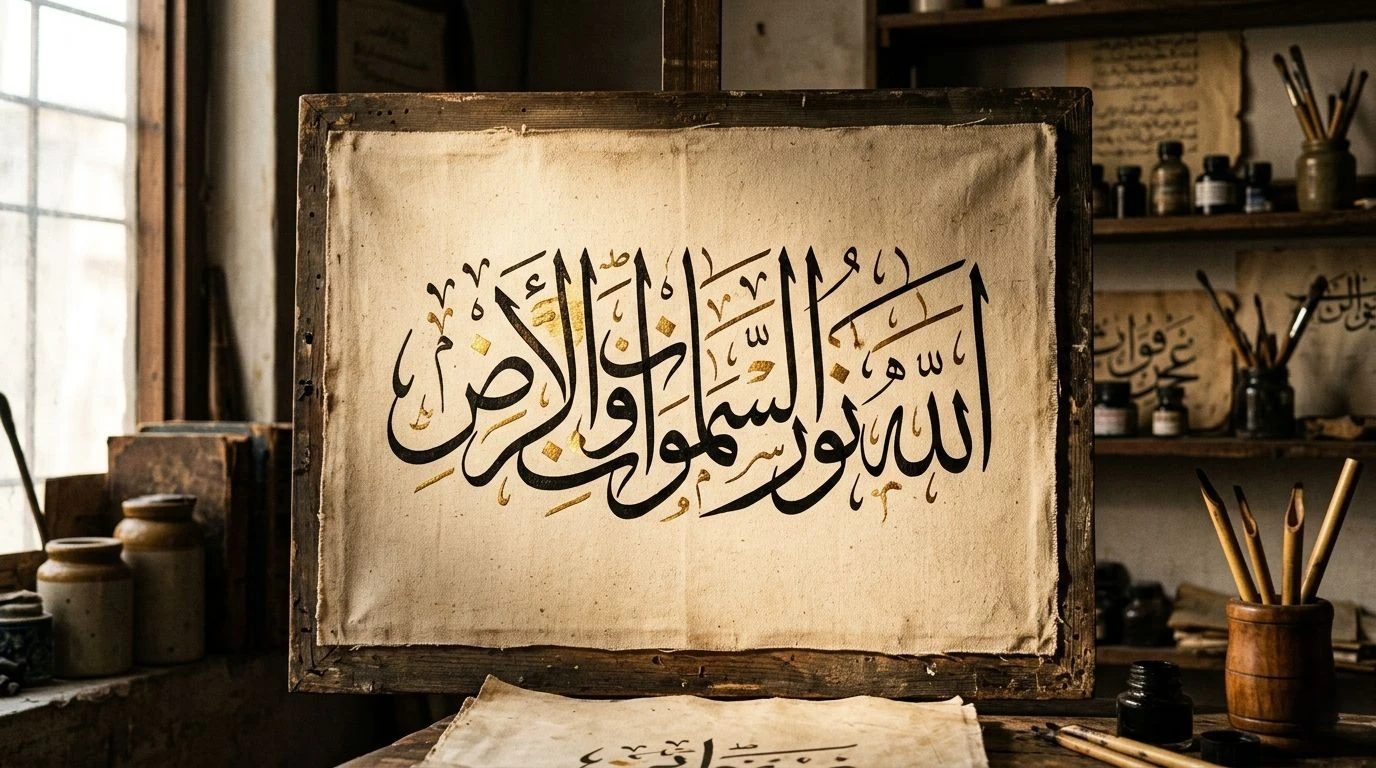 Calligraphic Art
What is Calligraphic Art of Pakistan?
Calligraphic art of Pakistan transforms written script into visual expression. Rooted in centuries of Islamic artistic tradition, calligraphy in Pakistan appears not only in manuscripts but also in paintings, architectural decoration, metalwork, and contemporary interior design. Through flowing scripts and carefully balanced compositions, artists turn words into shapes, rhythm, and visual harmony.
Across the country, calligraphic art continues to inspire artists who explore both traditional techniques and modern interpretations. From galleries and exhibitions to homes and cultural institutions, this art form remains an enduring symbol of aesthetic refinement and spiritual expression.
The Origins of Calligraphic Art of Pakistan
The foundations of calligraphic art of Pakistan lie within the broader traditions of Islamic art. For centuries, calligraphy held a central place in artistic expression because written words—especially sacred texts—were treated with deep reverence.
As a result, script itself became a powerful visual element. Artists developed refined styles of writing that balanced proportion, spacing, and movement. These scripts were used to decorate manuscripts, mosque walls, and architectural elements across the Islamic world.
Over time, these traditions influenced artists throughout the region that is now Pakistan. Calligraphic compositions began appearing in manuscripts, decorative panels, and religious architecture, establishing a strong artistic heritage that continues to influence contemporary artists.
Scripts and Styles
Calligraphic art of Pakistan often incorporates classical scripts that have developed over many centuries. Among the most recognized are:
Naskh – an elegant script known for its clarity and balance.
Thuluth – bold and expressive, often used for decorative compositions and architectural inscriptions.
Kufic – a geometric script frequently used in architectural decoration and stylized artwork.
Each script carries its own rhythm and structure. Artists study these forms carefully, learning the precise proportions that allow the letters to flow gracefully across a surface.
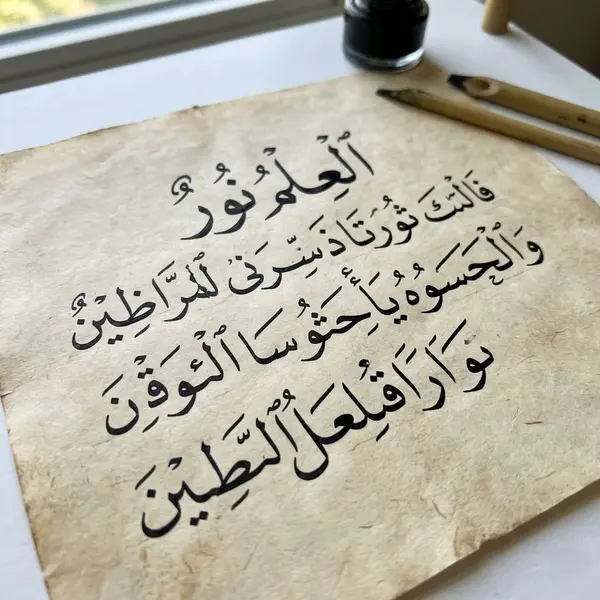 Naskh script known for clarity and balance
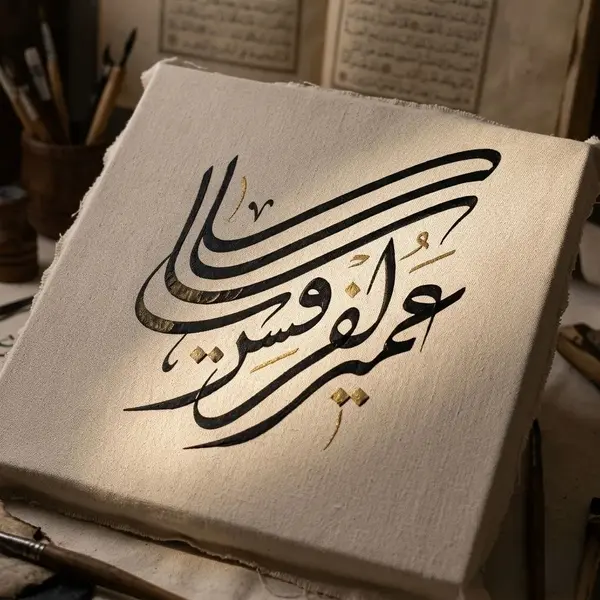 Thuluth script with bold decorative strokes
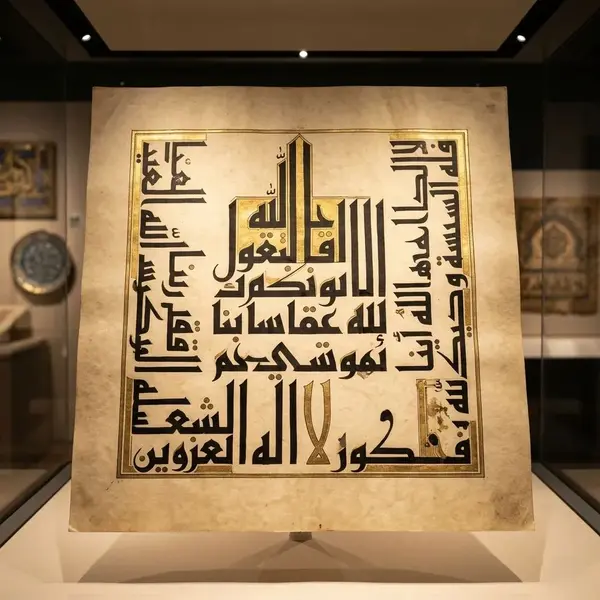 Kufic script with geometric structure
Calligraphy
as Visual Design
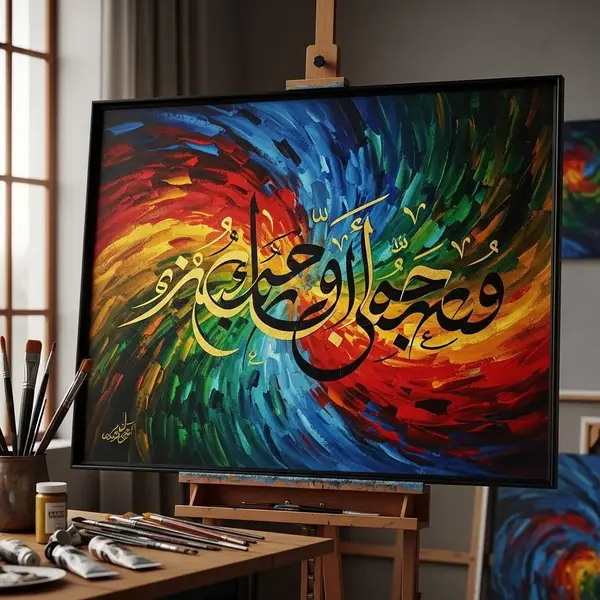
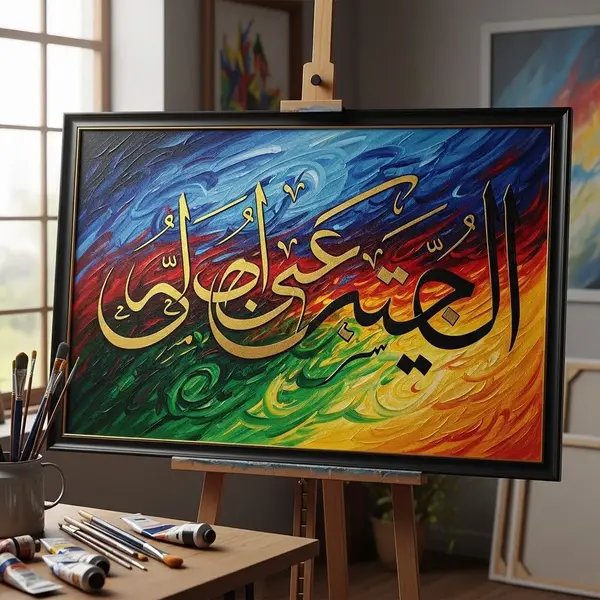
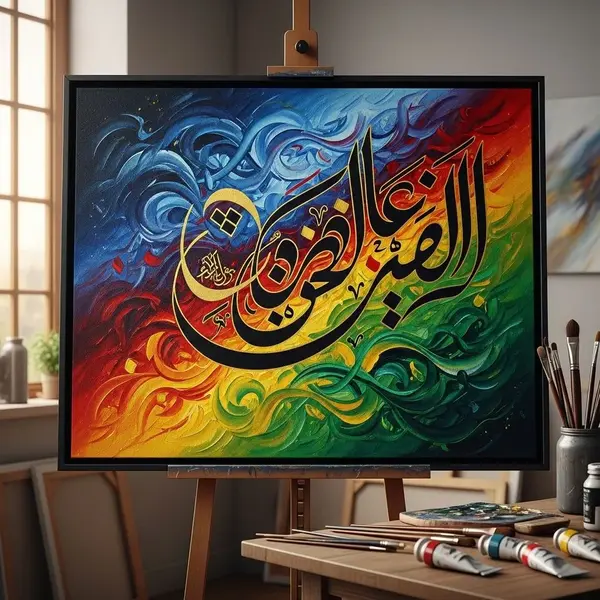
One of the most fascinating aspects of calligraphic art of Pakistan is the way it merges language and visual design. Letters are not merely written; they become shapes that interact with space and color.
Artists carefully arrange script so that the composition achieves harmony and movement. The meaning of the words remains important, but the visual arrangement of the letters becomes equally significant.
In many works, calligraphy appears abstract to viewers who may not read the script. Yet the flowing forms and balanced composition allow the artwork to be appreciated purely for its aesthetic beauty.
Calligraphic Art of Pakistan - Materials
and Techniques
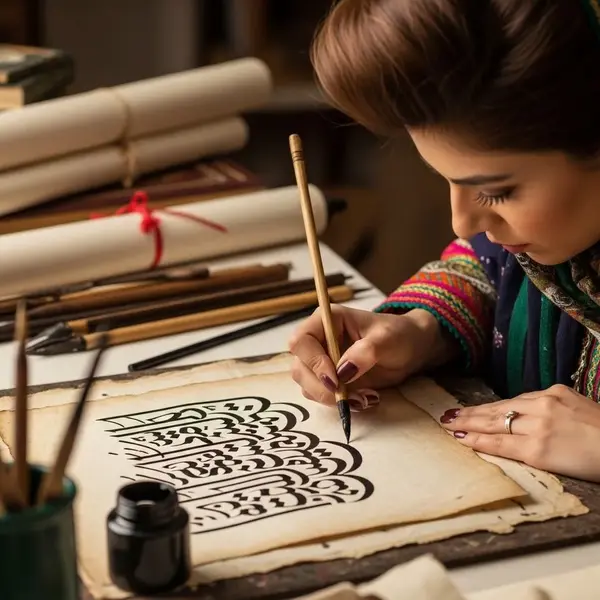
Traditional calligraphic art relies on a small set of carefully chosen tools.
Artists often work with reed or bamboo pens, specially prepared ink, and textured paper designed to hold the flowing lines of script.
Calligraphic art traditionally uses simple but refined tools:
- bamboo or reed pens
- ink prepared for smooth flow
- handmade or textured paper
In contemporary practice, artists expand these materials to include canvas, acrylic paint, gold leaf, and mixed media.
These materials allow calligraphy to move beyond manuscripts into paintings, wall art, and decorative panels.
Creating calligraphic compositions requires patience and discipline. Each stroke must be executed with control, as even slight variations in pressure or angle can change the character of a letter.
Contemporary artists expand upon these traditional tools by working on canvas, wood panels, or mixed media surfaces. Acrylic paints, metallic pigments, and gold leaf are often incorporated to create visually striking compositions that bridge tradition and modern artistic expression.
Calligraphic Art in Contemporary Interiors
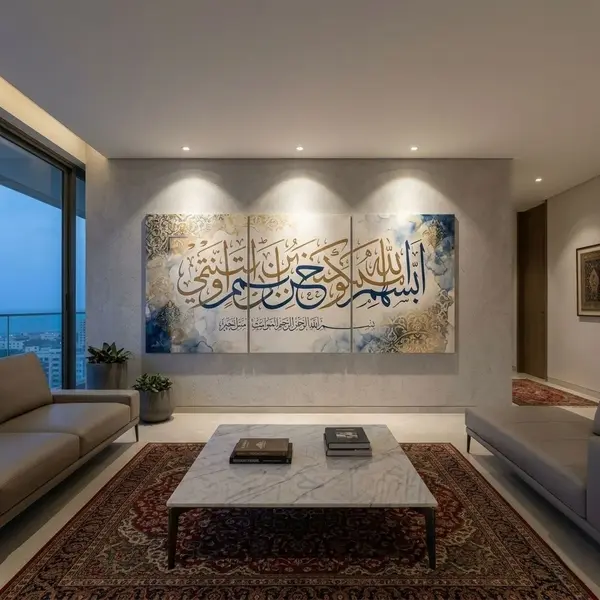
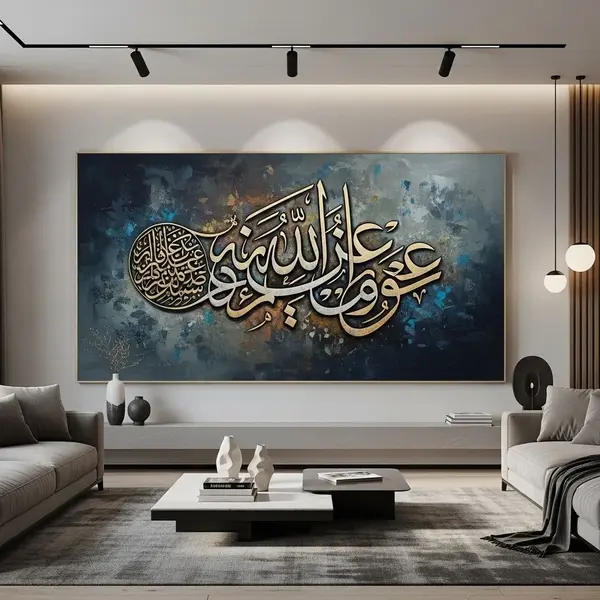
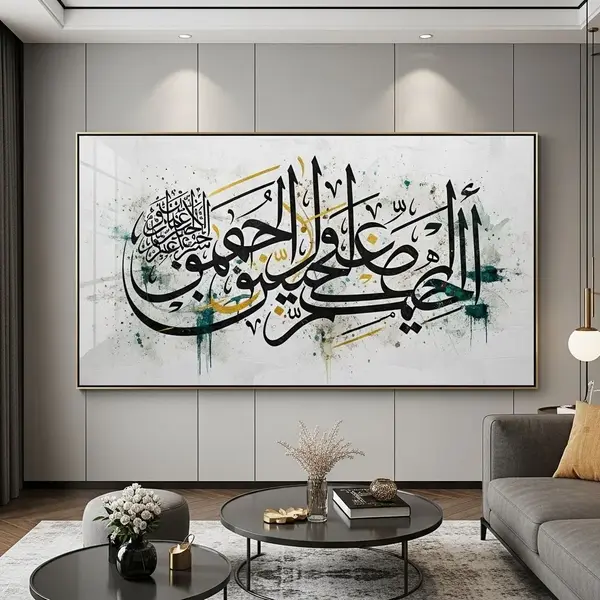
Today calligraphic art of Pakistan continues to evolve beyond traditional manuscripts. Modern artists reinterpret calligraphy in paintings, digital art, installations, and decorative panels.
Calligraphic compositions frequently appear in contemporary interior design, where framed artworks become focal points in living spaces, galleries, and cultural institutions. Designers often combine traditional scripts with modern color palettes and textures, creating artworks that feel both timeless and contemporary.
This adaptability has helped calligraphic art remain relevant in an era of rapidly changing artistic trends.
Women
Artists and Contemporary Expression
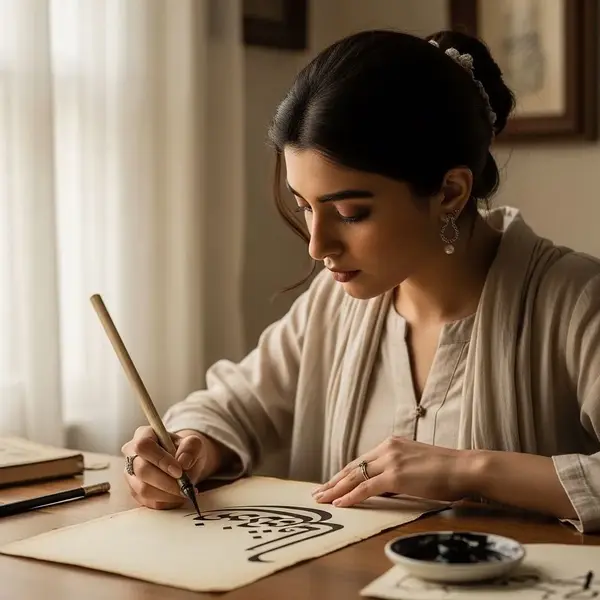
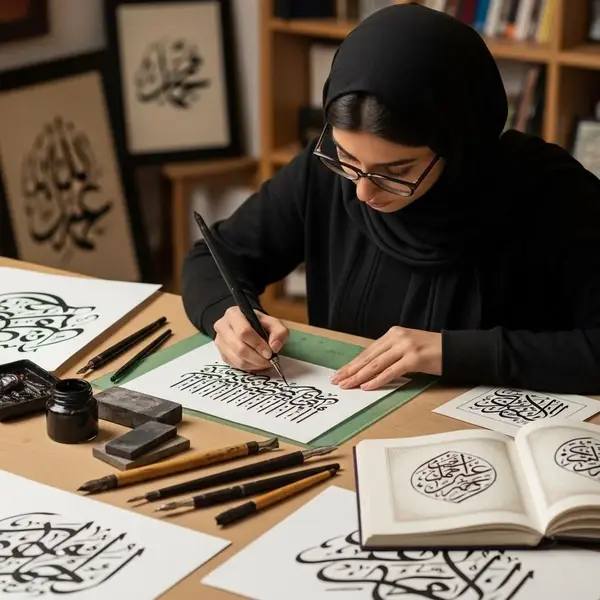
In recent years, many women artists across Pakistan have embraced calligraphic art as a powerful medium of expression. Through painting, mixed media, and digital techniques, they reinterpret traditional scripts while introducing new perspectives and artistic experimentation.
These artists contribute to a vibrant and evolving creative landscape. Their work demonstrates how traditional art forms can be reimagined for contemporary audiences while still preserving the discipline and elegance that define classical calligraphy.
By documenting and highlighting such artists, platforms like MizLink Pakistan help bring greater visibility to the diverse voices shaping modern creative culture.
Preserving
a Living Art
Calligraphic art of Pakistan represents more than decorative writing. It reflects centuries of artistic discipline, cultural memory, and spiritual meaning.
Each carefully balanced stroke embodies a tradition passed down through generations of artists who devoted years to mastering the craft. Today, contemporary practitioners continue to reinterpret these traditions, ensuring that calligraphy remains a living and evolving art form.
Through exhibitions, educational initiatives, and digital platforms, the appreciation for calligraphic art continues to grow. By celebrating these traditions, we help preserve an artistic legacy that connects history, culture, and creative expression.
- Home
- Products and Trades
- Calligraphic Art of Pakistan

Newsletter Opt-in
Recent Articles


-
Wood with Metal Inlay Work
Aug 15, 26 03:54 AM
 Wood with metal inlay work of Pakistan shows how tables, boxes and chess boards combine function and ornament for interiors, gifting and display.
 -
Bridal Dupatta of Pakistan: Craft and Elegance
Jul 23, 26 02:59 PM
 Bridal dupatta of Pakistan reflects intricate embroidery, rich fabrics, and traditional craftsmanship in elegant wedding attire.
 -
Jamawar Fabric of Pakistan: Woven Heritage and Timeless Design
Jun 17, 26 03:15 PM
 Jamawar fabric of Pakistan is known for intricate woven paisley motifs, rich textile heritage, and timeless elegance in shawls, garments, and décor.