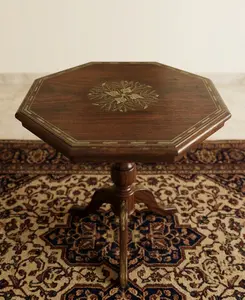
Antique
Carved Wooden Doors of Pakistan
Antique Carved Wooden Doors of Pakistan - Heritage Craft and
Architectural Beauty
Antique carved wooden doors of Pakistan are among the most striking elements of traditional architecture.
In the older quarters of cities and towns across Pakistan, antique carved wooden doors remain one of the most striking expressions of heritage design. These doors stand quietly along narrow streets and courtyards, often weathered by time yet still rich with detail. They reflect a tradition in which architecture and craftsmanship worked together to create entrances that were both functional and beautiful.
These doors once framed the threshold between street life and home life: a transition marked by craftsmanship, symbolism, and quiet grandeur.
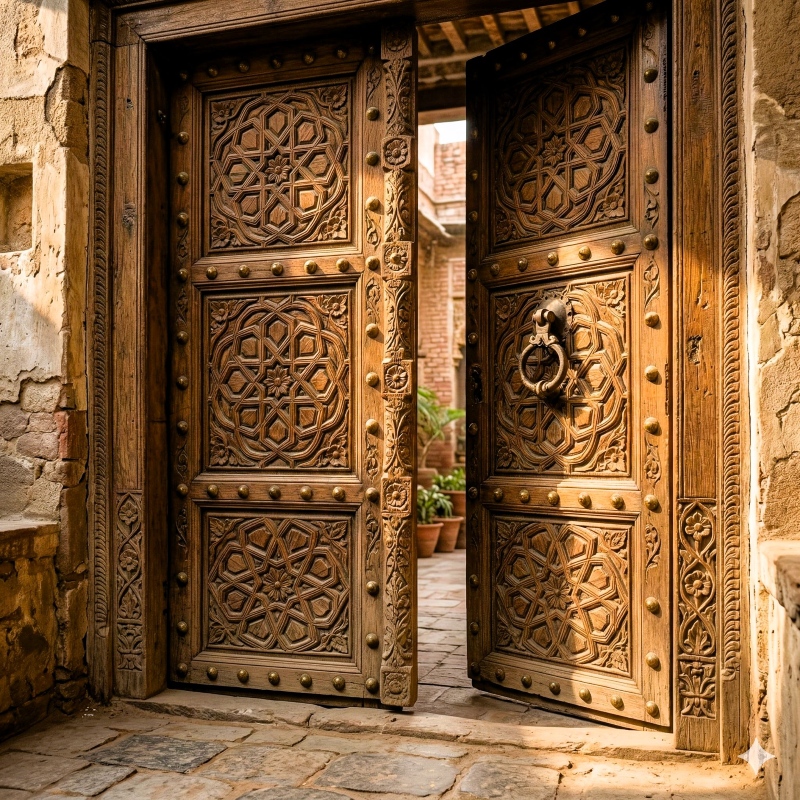 Antique carved wooden door.
A Tradition Rooted in
Architecture
The tradition of carved wooden doors in Pakistan is closely tied to historic architecture—courtyard homes, havelis, shrines, and old merchant houses. Over centuries, artisans developed distinctive carving styles informed by geometry, floral design, and regional aesthetics. Each door carried more than decoration: it reflected taste, identity, and the pride of a household.
Antique carved wooden doors of Pakistan are among the most striking elements of traditional architecture.
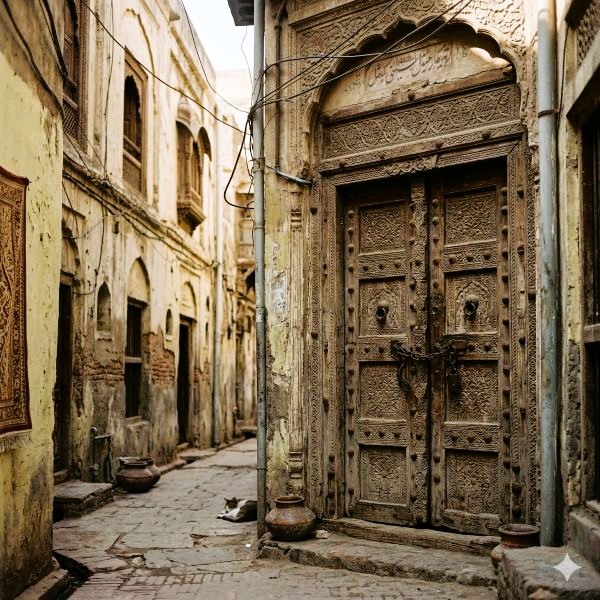 Traditional carved wooden entrance.
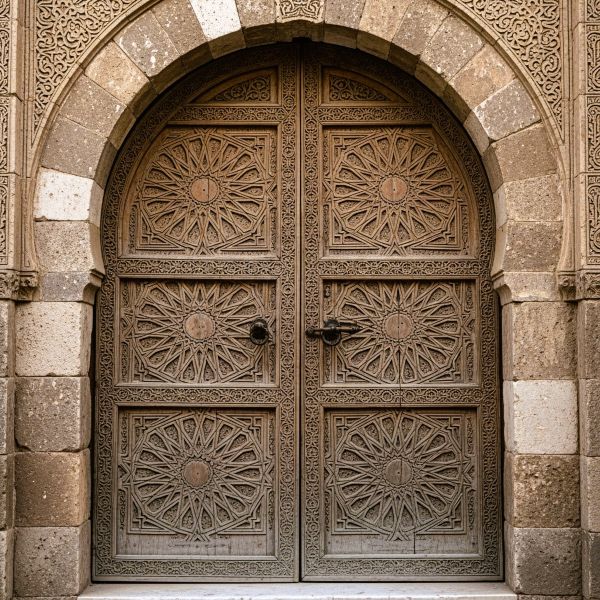 Historic wooden door carving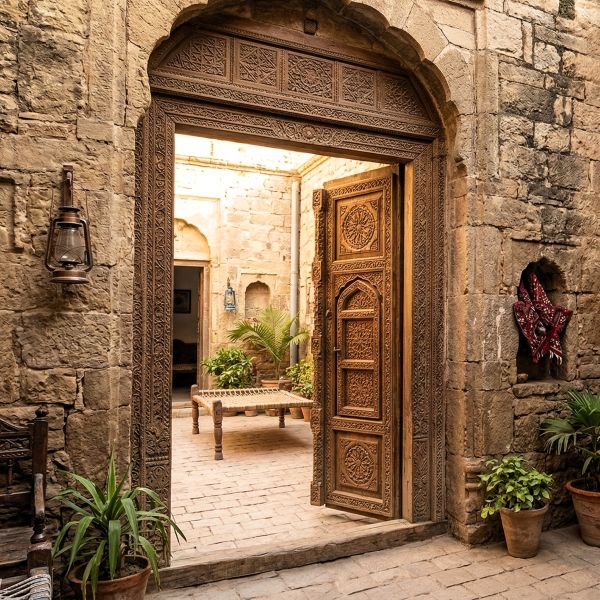
Wood That Was Chosen to
Last
Traditional doors were typically made from hardwoods selected for durability and workability. Common choices included:
- Sheesham (rosewood) for strength and rich grain
- Deodar cedar for natural resistance to pests
- Walnut wood in northern regions for fine carving
- Teak in some areas for resilience in humid climates
Because the material was strong, artisans could carve deep relief patterns that remain visible even after decades of weather and use.
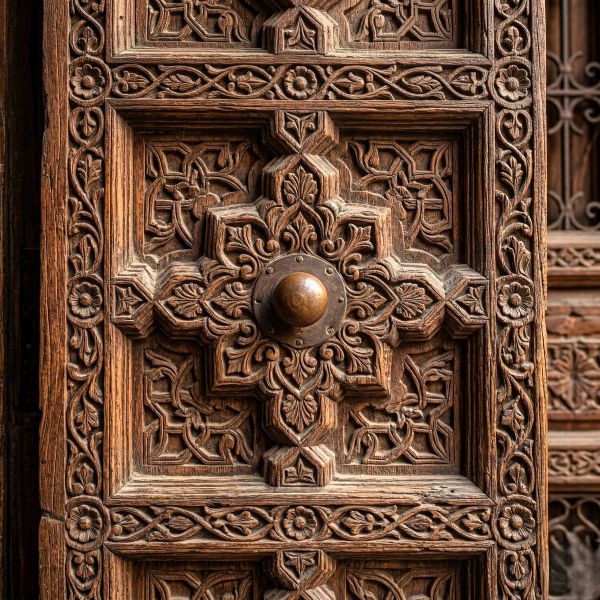 Hand carved door panel.
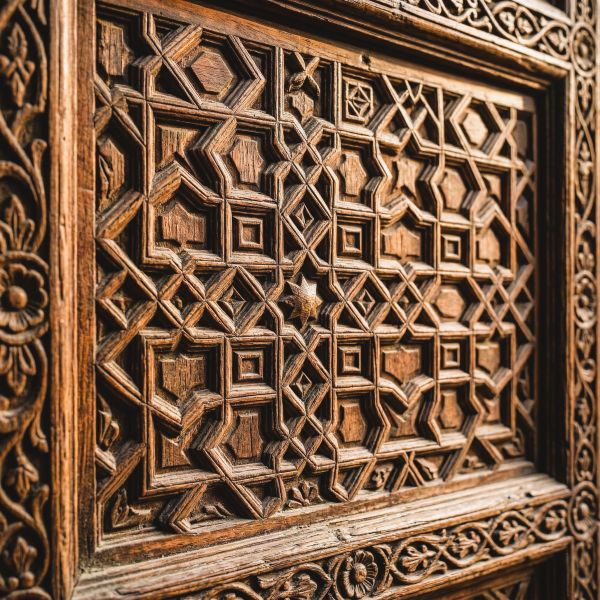 Geometric carving detail
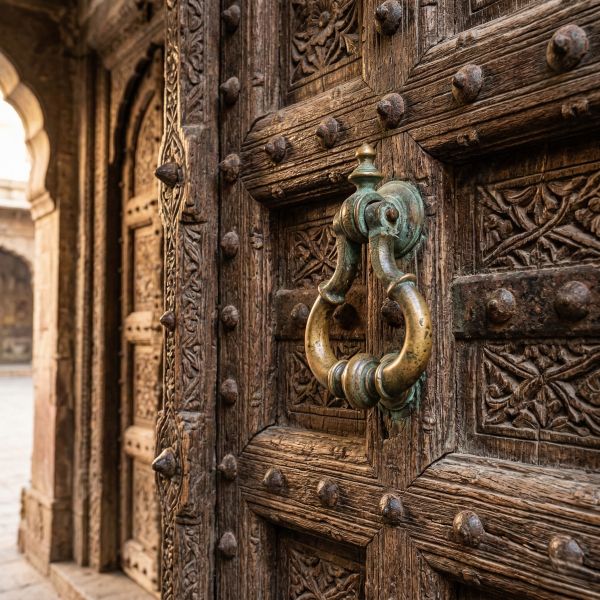 Traditional brass door knocker
The Language of Carving
Carving styles varied, but many antique doors share a recognizable design vocabulary:
- Geometric patterns
Repeated shapes and symmetrical divisions bring balance and order, often rooted in Islamic design traditions.
- Floral motifs
Vines, leaves, and blossoms soften the structure of the door and add a sense of life and movement.
- Panel structures
Many doors are built in sections—each panel treated like a canvas for a different motif.
- Metal elements
Brass studs, knockers, and handles add contrast and strength, and often become focal points in the composition.
Together, these elements create doors that feel sculptural—where craft and architecture meet.
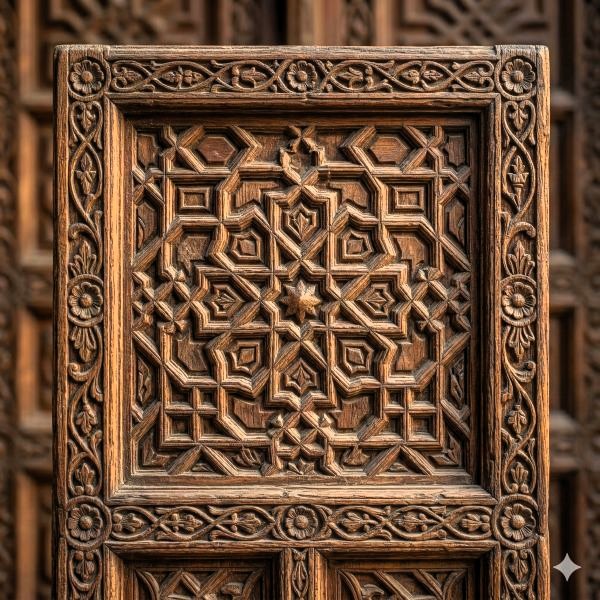 Symmetrical carved panel
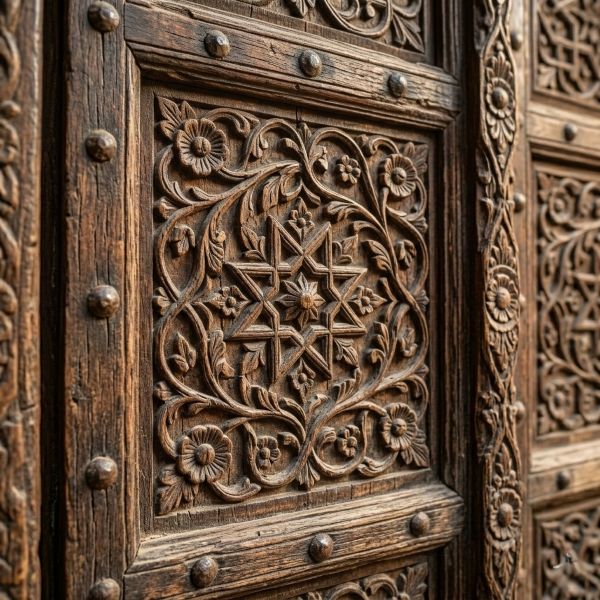 Floral carving motif
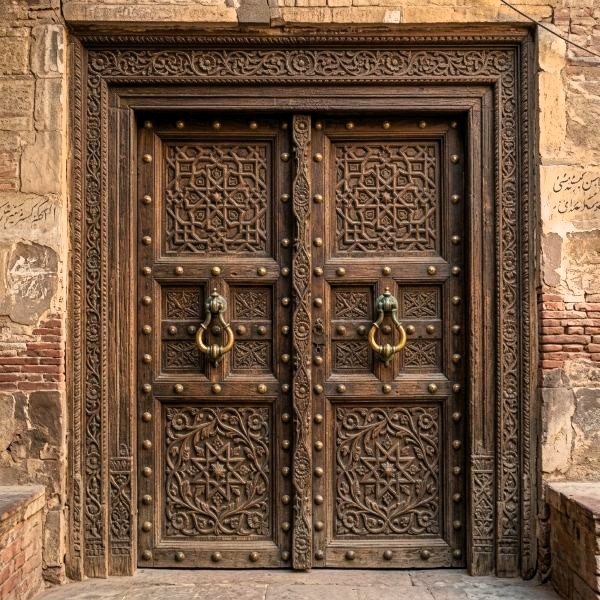 Decorative double door
Regional Character Across
Pakistan
Antique doors also carry regional identity.
- Punjab: bold paneling and strong symmetry, often associated with haveli architecture
- Sindh: intricate floral patterns and decorative detail, sometimes paired with painted wood traditions
- Khyber Pakhtunkhwa: heavier doors with deep carving, reflecting a robust architectural style
- Northern regions: fine walnut carving and refined detailing
These differences make antique doors valuable not only as design objects, but as cultural documents.
Craftsmanship and the Making of a Door
Behind every antique carved wooden door lies the patient work of skilled artisans. Traditional woodcarvers relied on simple hand tools—chisels, gouges, and mallets—to shape patterns into solid hardwood panels. The process demanded both strength and precision.
A door would first be constructed as a strong structural frame. Craftsmen then divided its surface into panels, each carefully marked with a design pattern. Only after the layout was complete would the carving begin.
The carving itself required remarkable control. Deep grooves created shadows that brought patterns to life, while finer detailing softened edges and added rhythm to the design. Because the work was done entirely by hand, no two doors were ever exactly alike.
This handcrafted quality is one of the reasons antique doors remain so compelling today. Each one carries subtle variations that reveal the presence of the artisan who shaped it.
Women and the Quiet Revival
of Heritage Doors
In recent years, antique carved doors have gained renewed appreciation through interior design—especially as more heritage elements are incorporated into contemporary homes.
In our own observations, we have come across women interior designers who actively seek out older carved doors—often pieces recovered from traditional buildings undergoing renovation. Rather than allowing these artifacts to disappear, they restore them carefully and integrate them into modern spaces.
Antique doors now appear as:
- statement entry doors
- interior sliding doors
- feature walls and panels
- architectural accents in modern homes
This approach does more than elevate interiors. It encourages respect for traditional craftsmanship and supports the restoration skills needed to preserve these historic pieces. It is a practical way to keep heritage design alive—by giving it a place in today’s homes.
Antique Doors in Contemporary Interiors
Today, antique carved doors are increasingly appreciated beyond their original architectural settings. Interior designers and homeowners often restore these historic pieces and incorporate them into modern spaces.
A reclaimed door may be used as a dramatic entryway, a sliding partition between rooms, or even as a decorative wall panel. In contemporary interiors, the aged wood and intricate carving introduce texture and history that modern materials often lack.
This approach allows heritage craftsmanship to remain relevant in the present. Rather than being discarded during renovation or redevelopment, antique doors can continue to be admired as design elements that connect past and present.
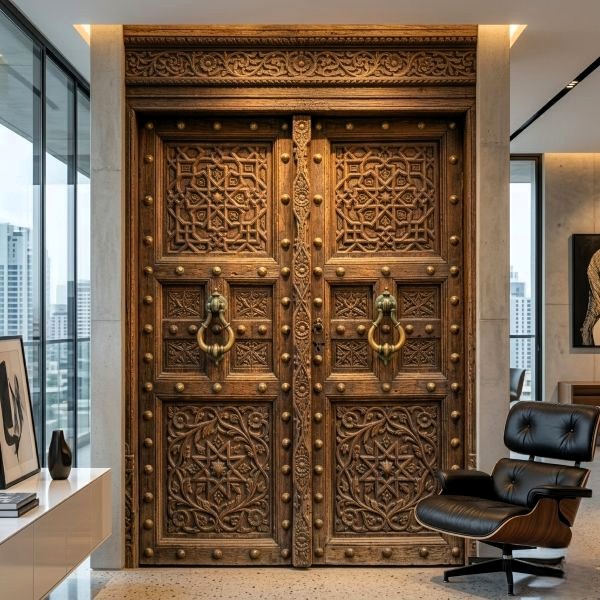 Restored heritage door
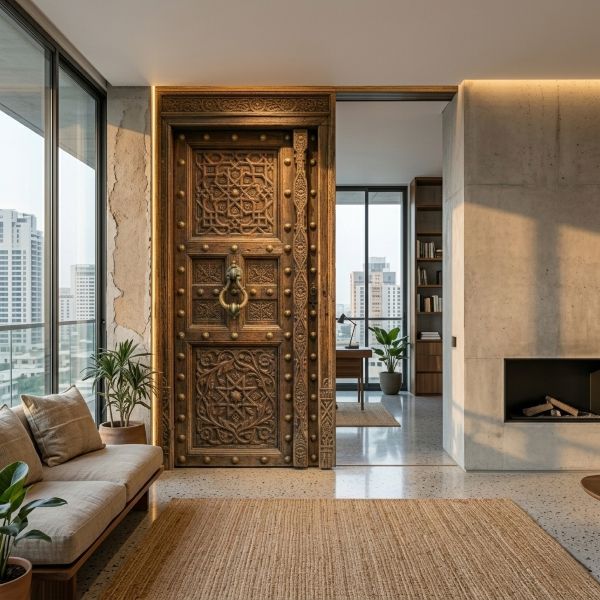 Sliding antique door
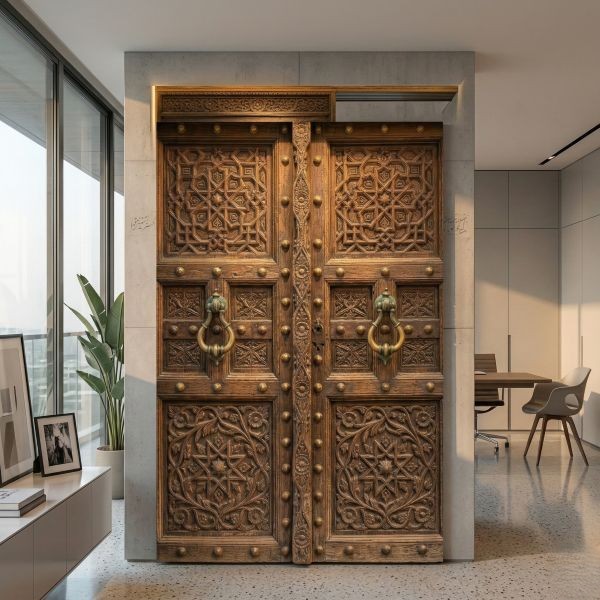 Decorative door panel
Preserving Craft at the Threshold
Antique carved wooden doors of Pakistan remind us that craftsmanship once shaped everyday architecture. They hold the marks of skilled hands, regional design language, and an older way of building—where even a doorway could be a masterpiece.
Preserving them—through restoration, careful reuse, and documentation—is not only about nostalgia. It is about keeping a living design tradition visible, valued, and understood.
- Home
- Products and Trades
- Antique Carved Wooden Doors

Newsletter Opt-in
Recent Articles


-
Wood with Metal Inlay Work
Aug 15, 26 03:54 AM
 Wood with metal inlay work of Pakistan shows how tables, boxes and chess boards combine function and ornament for interiors, gifting and display.
 -
Bridal Dupatta of Pakistan: Craft and Elegance
Jul 23, 26 02:59 PM
 Bridal dupatta of Pakistan reflects intricate embroidery, rich fabrics, and traditional craftsmanship in elegant wedding attire.
 -
Jamawar Fabric of Pakistan: Woven Heritage and Timeless Design
Jun 17, 26 03:15 PM
 Jamawar fabric of Pakistan is known for intricate woven paisley motifs, rich textile heritage, and timeless elegance in shawls, garments, and décor.