Antique Jharoka Windows of Pakistan
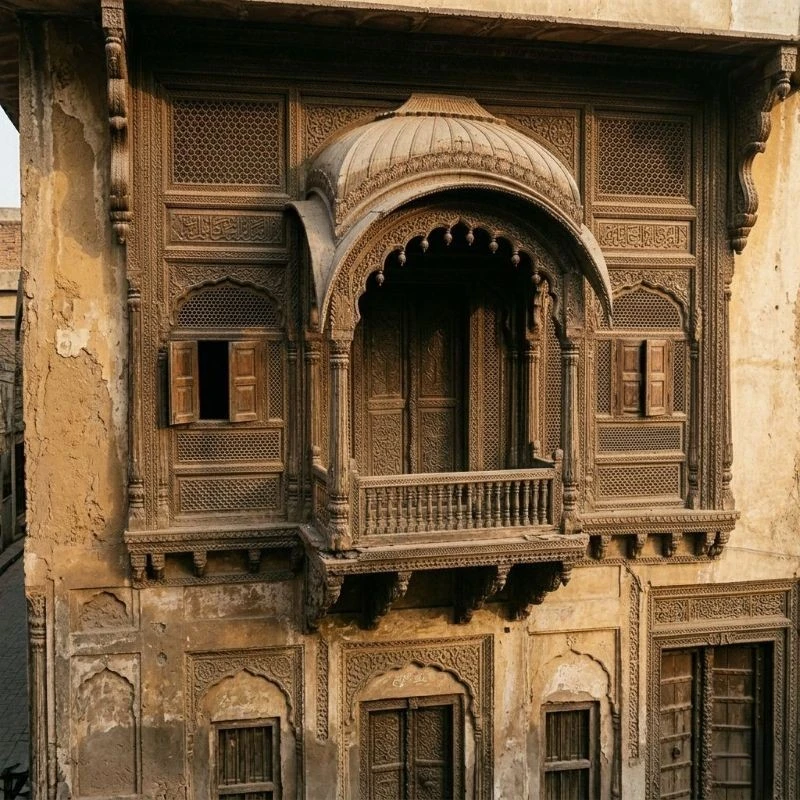
Antique Jharoka windows of Pakistan are distinctive architectural features known for their projecting forms, carved wooden frames, and intricate latticework. Found in historic homes, palaces, and traditional buildings, these windows combine artistry with practical design, allowing light and air to enter while maintaining privacy.
 Antique Jharoka Windows of Pakistan
What Are Antique Jharoka Windows of Pakistan?
Traditional architecture across Pakistan is filled with remarkable elements that combine beauty with practicality. Among these features, antique Jharoka windows stand out as some of the most elegant expressions of craftsmanship and design.
These projecting windows, often richly carved and decorated, appear in historic homes, palaces, and heritage buildings. Beyond their decorative appeal, Jharoka windows served important functional purposes. They allowed ventilation and natural light while preserving privacy within the household.
Today, antique Jharoka windows of Pakistan continue to inspire architects, interior designers, and collectors who appreciate the artistry of traditional architectural craftsmanship.
The Origins of Jharoka Windows
The concept of the Jharoka emerged in the broader architectural traditions of South Asia, where projecting windows became an essential design feature in palaces and noble residences.
Over time, artisans across the region developed distinctive variations of these windows. In areas that now form Pakistan, Jharoka windows became known for their finely carved wooden frames, ornate brackets, and decorative lattice screens.
These windows were often positioned on upper floors, allowing occupants to look out onto streets or courtyards while remaining partially concealed. In historic settings, Jharokas offered both a vantage point and a symbolic architectural statement.
Craftsmanship and Materials
The beauty of antique Jharoka windows of Pakistan lies largely in the skill of the artisans who created them. Craftsmen carefully carved wood into intricate patterns, transforming structural elements into works of art.
Traditional Jharokas often feature:
- hand-carved wooden frames
- decorative brackets supporting the projection
- lattice screens or carved panels
- detailed borders and floral motifs
These elements required careful planning and a deep understanding of woodcarving techniques. Each Jharoka window was typically crafted by hand, making every piece unique.
The durability of wood combined with intricate carving allowed these architectural features to survive for generations.
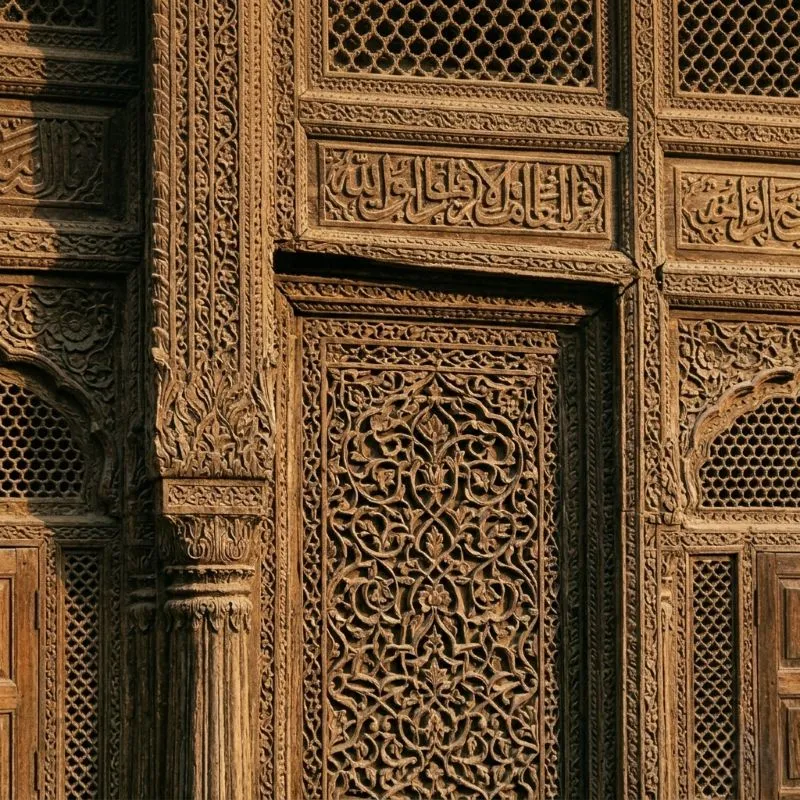 Carved floral and calligraphic patterns on Jharoka woodwork.
Architectural Craftsmanship and Regional Variations
Across different regions of Pakistan, Jharoka windows developed subtle variations in style and craftsmanship. Some feature elaborate floral carvings, while others emphasize geometric patterns and latticework.
In many historic buildings, the brackets supporting the projecting window are themselves carved into decorative shapes. These brackets not only support the structure but also contribute to the overall visual rhythm of the façade.
The combination of carved panels, lattice screens, and projecting balconies demonstrates the remarkable skill of traditional woodworkers and builders. Each Jharoka reflects a deep understanding of both structural design and decorative craftsmanship.
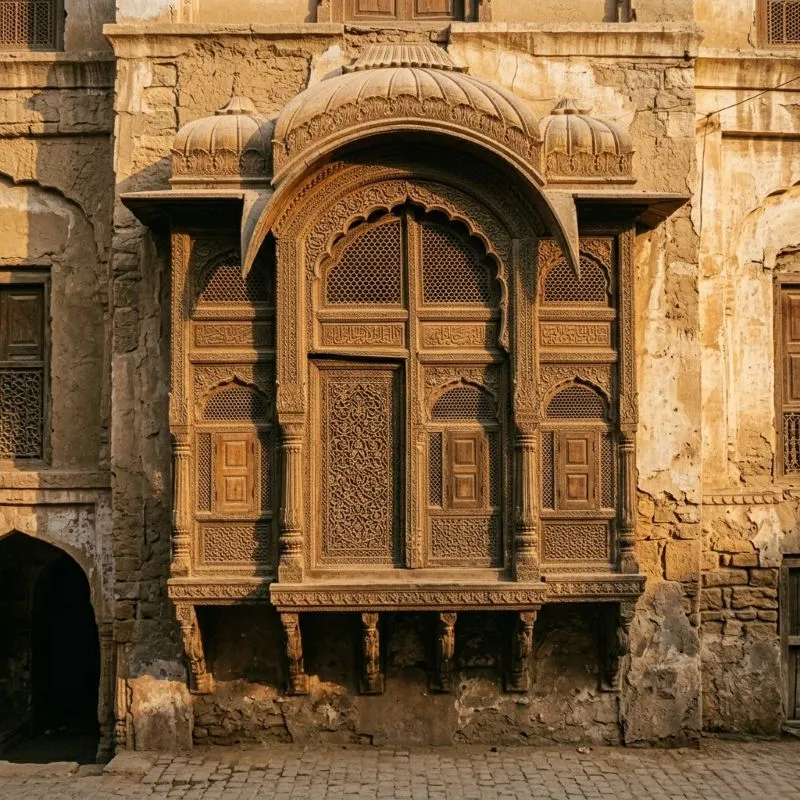 Traditional building façade with projecting Jharoka window.
Design and Visual
Characteristics
Antique Jharoka windows are instantly recognizable for their distinctive architectural form. They project outward from the building façade, creating both visual interest and functional space.
Many Jharokas include small balconies or enclosed viewing spaces. Decorative carvings often depict floral motifs, geometric patterns, or flowing ornamental designs.
The interplay of light and shadow through carved panels adds another layer of visual richness. As sunlight filters through the openings, the patterns create shifting shadows inside the building.
This balance between structure and ornament is one of the defining qualities of traditional Jharoka design.
The Role of Jharoka Windows in Daily Life
In traditional homes, Jharoka windows served more than a decorative purpose. They played an important role in the daily life of households. Because these windows projected outward from the building façade, they allowed residents to observe activity in the street or courtyard below.
At the same time, carved panels and lattice screens helped maintain privacy within the home. This feature was especially valued in traditional architecture, where domestic spaces were carefully designed to balance openness and discretion.
Jharokas also helped regulate airflow. The projecting structure allowed breezes to circulate through the interior rooms, making homes more comfortable during warmer seasons. In this way, antique Jharoka windows combined architectural beauty with thoughtful environmental design.
Jharoka Windows and Climate-Sensitive Design
In traditional homes, Jharoka windows served more than a decorative purpose. They played an important role in the daily life of households. Because these windows projected outward from the building façade, they allowed residents to observe activity in the street or courtyard below.
At the same time, carved panels and lattice screens helped maintain privacy within the home. This feature was especially valued in traditional architecture, where domestic spaces were carefully designed to balance openness and discretion.
Jharokas also helped regulate airflow. The projecting structure allowed breezes to circulate through the interior rooms, making homes more comfortable during warmer seasons. In this way, antique Jharoka windows combined architectural beauty with thoughtful environmental design.
One of the most practical aspects of antique Jharoka windows of Pakistan is how effectively they respond to the local climate. Traditional builders understood the importance of natural ventilation and shading long before modern cooling systems existed.
Because Jharokas project outward from the building façade, they create shaded openings that reduce direct sunlight entering interior rooms. The carved panels and latticework further soften the light while allowing air to circulate freely.
This combination of shade, airflow, and filtered light helped keep homes cooler during hot seasons. In many historic buildings, Jharoka windows functioned as an important architectural solution for improving comfort within enclosed spaces.
The design demonstrates how traditional architecture often integrated environmental awareness with artistic expression.
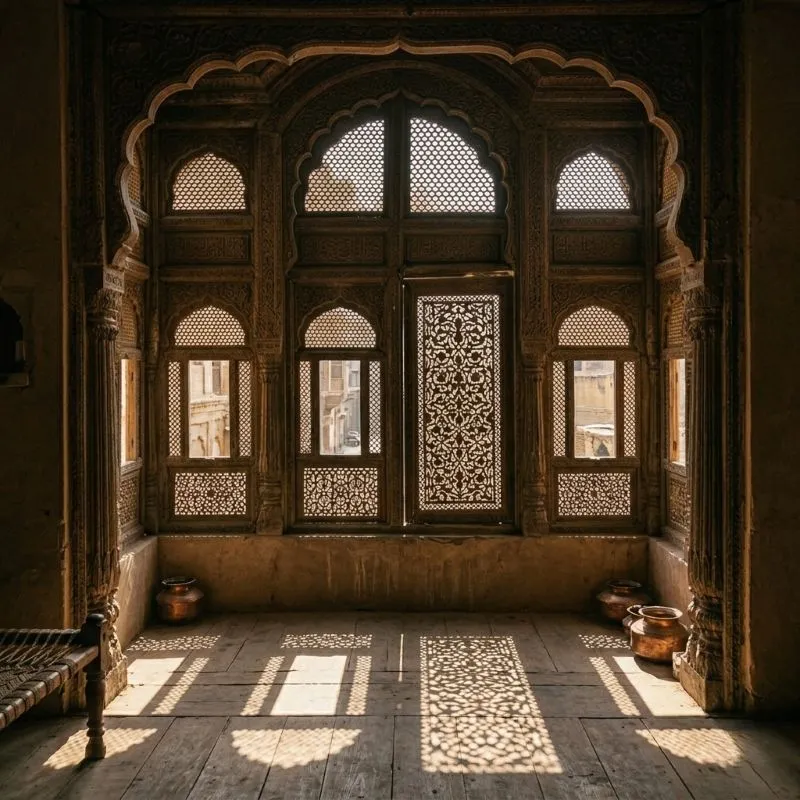 Light filtering through carved Jharoka lattice.
Decorative Symbolism in Jharoka Carvings
The decorative patterns carved into antique Jharoka windows often reflect artistic traditions found across South Asian architecture. Artisans frequently incorporated floral motifs, vines, and geometric patterns that symbolized harmony and balance.
These carvings were not simply ornamental. They formed part of a broader decorative language that appeared in doors, screens, ceilings, and architectural panels throughout historic buildings.
The repeating patterns created visual rhythm across building façades, allowing individual elements such as Jharokas to become focal points within the overall architectural composition.
Through these carvings, traditional craftsmen transformed structural components into works of art that continue to capture the imagination of architects and designers today.
Jharoka Windows in
Contemporary Interiors
Although many antique Jharoka windows originate from historic buildings, they continue to influence modern design. Architects and interior designers often incorporate reclaimed Jharoka panels into contemporary spaces.
These elements may appear as decorative wall pieces, window frames, or architectural accents within modern homes. Their intricate carvings bring warmth and cultural depth to interior spaces.
Collectors and designers value antique Jharokas not only as architectural fragments but also as works of traditional craftsmanship.
Preserving Architectural
Heritage
Antique Jharoka windows of Pakistan represent an important part of the region’s architectural heritage. Each carved panel reflects the skill and imagination of artisans who shaped wood into intricate patterns.
Preserving such elements helps maintain a connection to the craftsmanship and design traditions of earlier generations. Through documentation, restoration, and thoughtful reuse, these architectural features continue to inspire appreciation for traditional building arts.
By exploring elements such as Jharoka windows, we gain deeper insight into how architecture once blended functionality, artistry, and cultural expression.
- Home
- Products and Trades
- Antique Jharoka Windows

Newsletter Opt-in
Recent Articles


-
Wood with Metal Inlay Work
Aug 15, 26 03:54 AM
 Wood with metal inlay work of Pakistan shows how tables, boxes and chess boards combine function and ornament for interiors, gifting and display.
 -
Bridal Dupatta of Pakistan: Craft and Elegance
Jul 23, 26 02:59 PM
 Bridal dupatta of Pakistan reflects intricate embroidery, rich fabrics, and traditional craftsmanship in elegant wedding attire.
 -
Jamawar Fabric of Pakistan: Woven Heritage and Timeless Design
Jun 17, 26 03:15 PM
 Jamawar fabric of Pakistan is known for intricate woven paisley motifs, rich textile heritage, and timeless elegance in shawls, garments, and décor.