Traditional Necklaces of Gilgit-Baltistan
Traditional Necklaces of Gilgit-Baltistan
Rustic adornment, regional identity, and handcrafted beauty
Traditional necklaces of Gilgit-Baltistan, among the many design traditions, hold a quiet but distinctive place. Their appeal lies not in polished uniformity, but in character - the visible presence of hand-assembled beads, rustic metalwork, and pendants that reflect regional taste and material culture.
These necklaces often combine vivid color with simple structure. Red, turquoise, and deep blue beads bring brightness and contrast, while metal pendants and spacers add weight, symbolism, and visual focus. Together, these elements create adornment that feels both expressive and rooted in place.
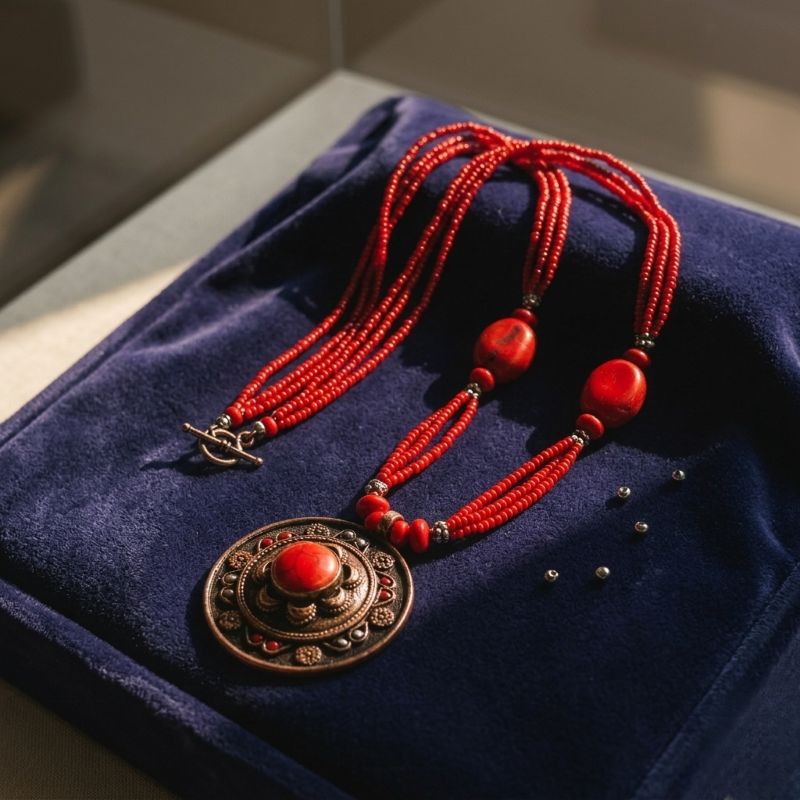 Red bead necklace with handcrafted pendant from Gilgit-Baltistan
What makes such necklaces especially compelling is their honesty. They are not overly refined objects produced for luxury branding. Many are made in small setups and sold through local jewelry shops, carrying with them the aesthetic of everyday craft traditions rather than mass-produced sameness.
Jewelry and Adornment in Regional Life
In many parts of Gilgit-Baltistan, adornment has long been part of how identity, celebration, and personal taste are expressed. Jewelry may be worn at gatherings, festive occasions, family events, or simply as part of regional dress traditions that value color and ornament.
Necklaces in particular bring together several qualities at once: they frame the face and upper body, introduce color into dress, and often become the central decorative element of an outfit. Even when simple in construction, they can have strong visual presence.
The necklaces seen today may not always follow one strict historical pattern. Some reflect older regional aesthetics, while others show adaptation - combining traditional color sensibilities and pendant forms with materials that are easier to source and assemble in small local workshops.
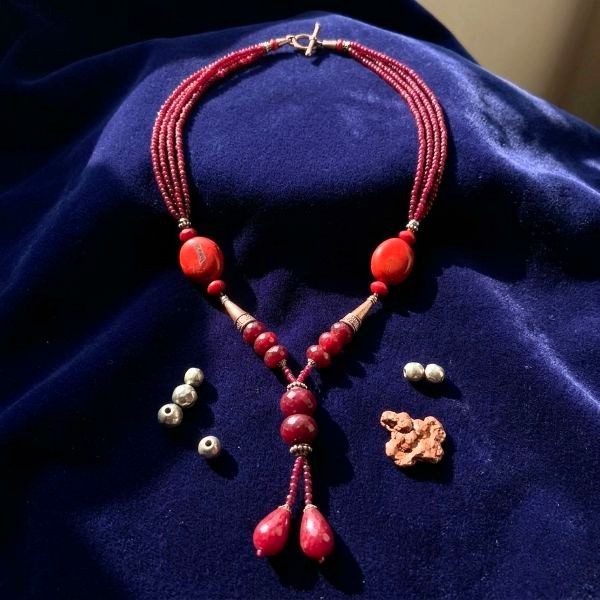 Maroon bead necklace with silver cone connectors, a traditional design from Gilgit-Baltistan
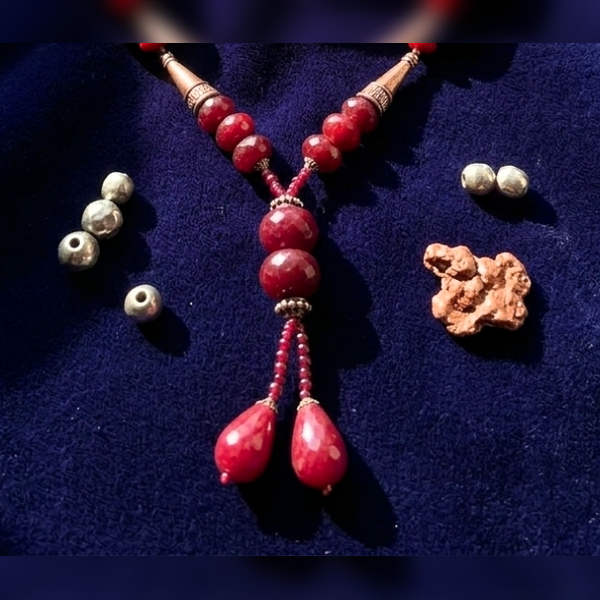 Close-up of bead cluster and drop elements
Traditional Necklaces of Gilgit-Baltistan - Materials, Color, and Hand Assembly
One of the most striking features of these necklaces is their use of color. Rich reds, turquoise tones, and deep blues appear again and again, creating a lively contrast against fabric and dress. These colors feel especially at home in the visual language of the northern regions, where jewelry often balances rustic earthiness with vivid accents.
The materials may include beads, metal spacers, simple clasps, and statement pendants. In some pieces, the pendant becomes the visual anchor; in others, the rhythm of the beads themselves creates the appeal.
Because many of these necklaces are assembled in small setups, slight irregularities become part of their charm. A bead may sit a little differently, a metal fitting may show the hand of the maker, or a pendant may feel heavier and more individual than something factory-made. Rather than reducing their value, these qualities give the necklaces personality.
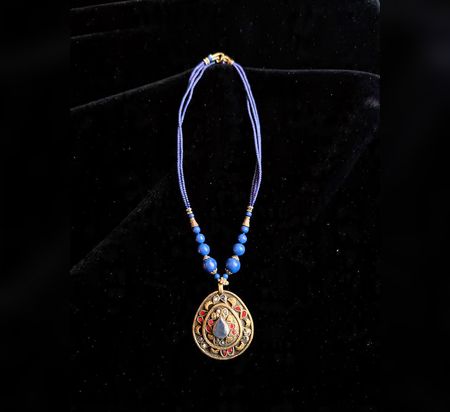 Blue bead necklace with decorative pendant.
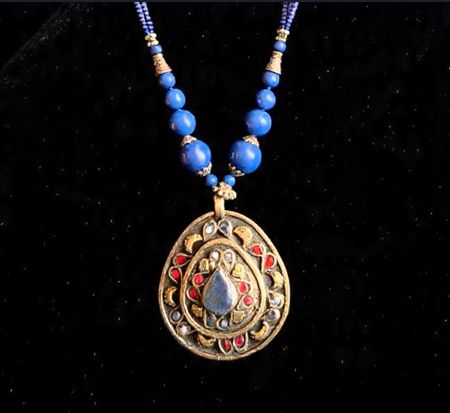 Pendant detail with blue beads
Traditional Necklaces of Gilgit-Baltistan - Design Features and Visual Character
The necklaces in this collection show several recurring features:
Bold use of color
Bright red and blue strands immediately draw attention and give the jewelry a celebratory feel.
Central pendant forms
Round, teardrop, or sculptural pendants create a focal point and give each necklace its own identity.
Layered beadwork
Even simple strands gain richness when beads are repeated in rhythm or broken by contrasting spacer elements.
Rustic metal detailing
The metal settings and pendants are not overly polished, which adds to the handmade, regional character of the pieces.
This is jewelry with presence. It does not rely on fine finish alone. Instead, it speaks through color, form, and handcrafted assembly.
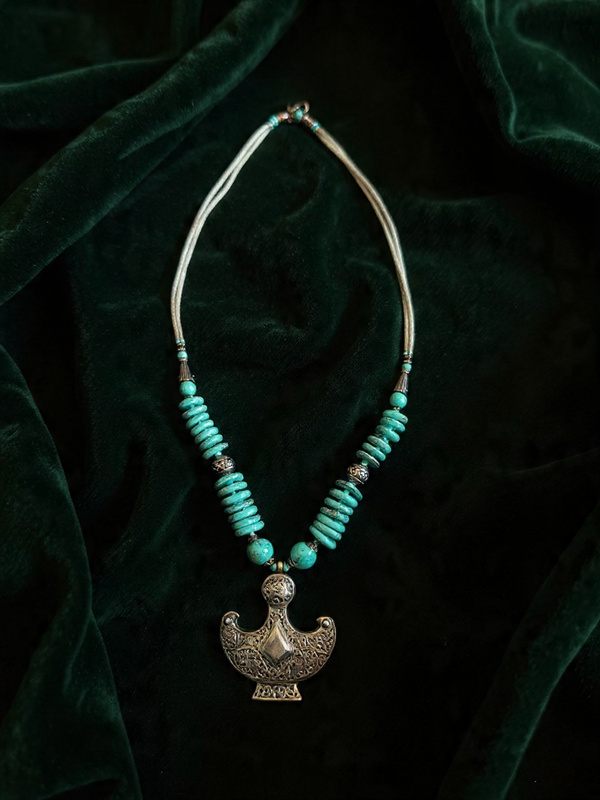 Turquoise bead necklace with engraved silver pendant
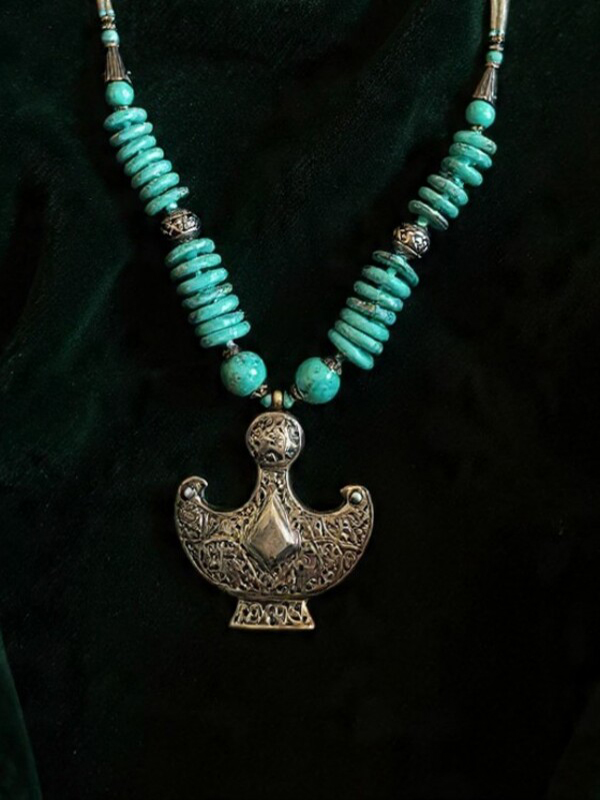 Pendant detail with turquoise beads
A Craft Shaped by Small Setups
An important part of the story lies in how such jewelry reaches the market. Many pieces of this kind are not produced in large formal workshops. They often emerge from small-scale making environments and are sold through local jewelry shops.
That context matters. It means the craft survives through modest, practical channels rather than through large luxury systems. It also means the pieces remain close to the everyday economy of the region - accessible, wearable, and connected to local taste.
This small-scale character gives the jewelry a different kind of value. It reflects regional enterprise, adaptability, and the continued relevance of handcrafted adornment in a changing marketplace.
Women and the Visibility of Regional Adornment
Jewelry traditions remain closely connected to women’s lives - through wearing, choosing, preserving, gifting, and selling. Even where production is modest, women help keep these forms visible by continuing to value regional adornment and incorporate it into personal style and occasion-wear.
For MizLink, this matters greatly. Such necklaces are not only decorative objects; they are part of a wider story about how women sustain craft visibility. They keep regional tastes alive, support local markets, and ensure that handmade adornment continues to have a place in contemporary life.
In this sense, the necklace becomes more than an accessory. It becomes a small but meaningful expression of cultural continuity.
Preserving Beauty in Everyday Form
Across the northern regions of Pakistan, handcrafted bead necklaces have long been worn as part of everyday adornment. Artisans often use materials such as laakh, turquoise, and metal accents to create textured beadwork that carries both color and durability.
Rather than relying on large pendants, many of these necklaces highlight the beauty of the beads themselves. Turquoise stones embedded in laakh create a distinctive pattern that reflects the quiet artistry of regional craftsmanship. Such pieces move easily between communities across the mountain regions, where craft traditions often overlap and influence one another. When documented and appreciated, such jewelry helps preserve not only objects, but also the visual language of a region and the quiet creative economies that continue to sustain it.
Jewelry traditions of northern Pakistan maintain their own distinct identity. While the mountain regions historically connected different cultures through trade routes, the beadwork, turquoise inlay, and balanced forms seen in these pieces reflect a craft tradition rooted in the communities of Pakistan’s northern valleys.
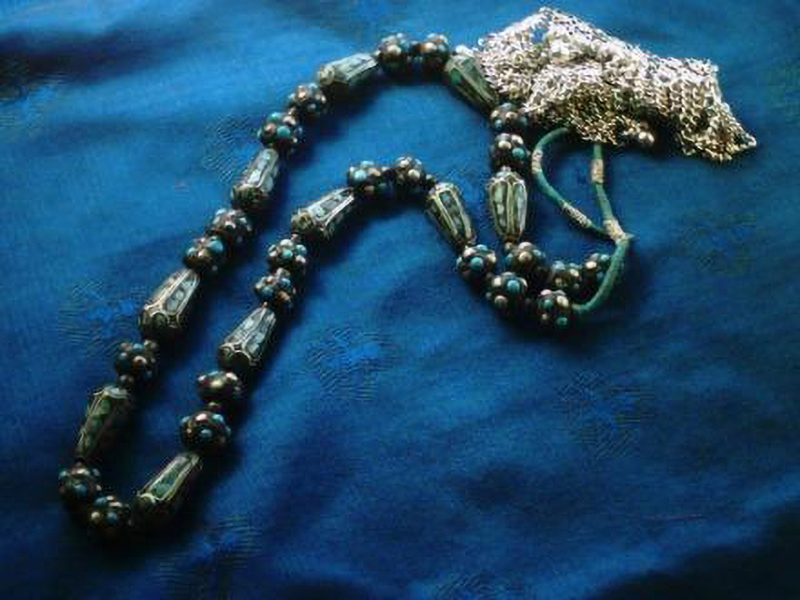 Laakh bead necklace with turquoise inlay from northern Pakistan
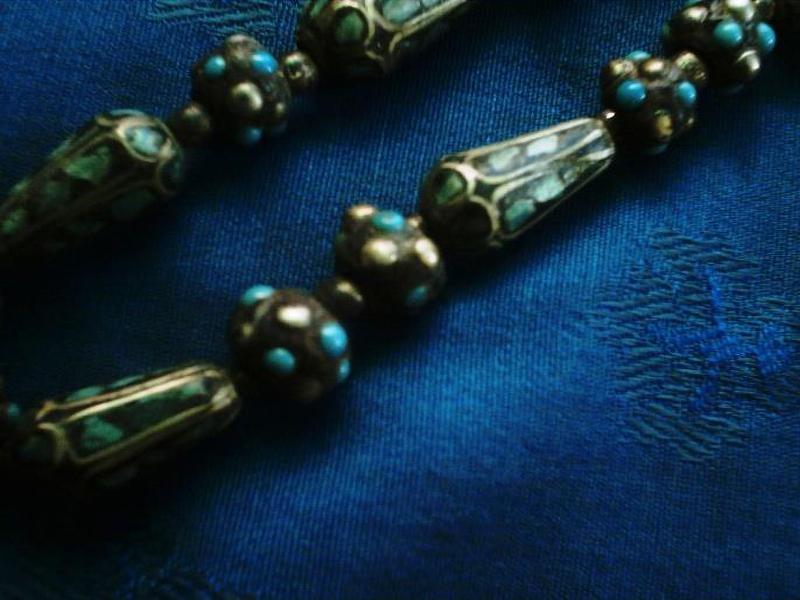 Turquoise stones embedded in laakh beadwork
- Home
- Products and Trades
- Traditional Necklaces of Gilgit Baltistan

Newsletter Opt-in
Recent Articles


-
Wood with Metal Inlay Work
Aug 15, 26 03:54 AM
 Wood with metal inlay work of Pakistan shows how tables, boxes and chess boards combine function and ornament for interiors, gifting and display.
 -
Bridal Dupatta of Pakistan: Craft and Elegance
Jul 23, 26 02:59 PM
 Bridal dupatta of Pakistan reflects intricate embroidery, rich fabrics, and traditional craftsmanship in elegant wedding attire.
 -
Jamawar Fabric of Pakistan: Woven Heritage and Timeless Design
Jun 17, 26 03:15 PM
 Jamawar fabric of Pakistan is known for intricate woven paisley motifs, rich textile heritage, and timeless elegance in shawls, garments, and décor.