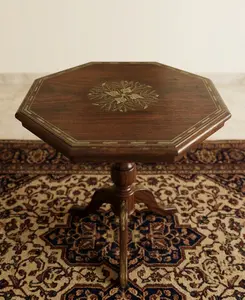
Wood with Metal Inlay Work
Wood with metal inlay work is a distinctive craft of Pakistan that combines the warmth and character of wood with the brightness and precision of metal. Through careful handwork, artisans embed fine strips, wires or shaped pieces of metal into the wooden surface, creating patterns that range from understated borders to richly decorative motifs.
This technique is used on a variety of products. Among the most striking are table tops, side tables, jewelry boxes and chess boards, but the craft also appears in trays, mirror frames, decorative panels, desk accessories and other handcrafted items. The result is a body of work that is both functional and ornamental, making it suitable for homes, offices and gift collections.
In Pakistan, woodcraft traditions have long been appreciated for their beauty, durability and artisanal value. When combined with metal inlay, these traditions take on an added layer of refinement, bringing together two materials that contrast beautifully while complementing each other in form and finish.
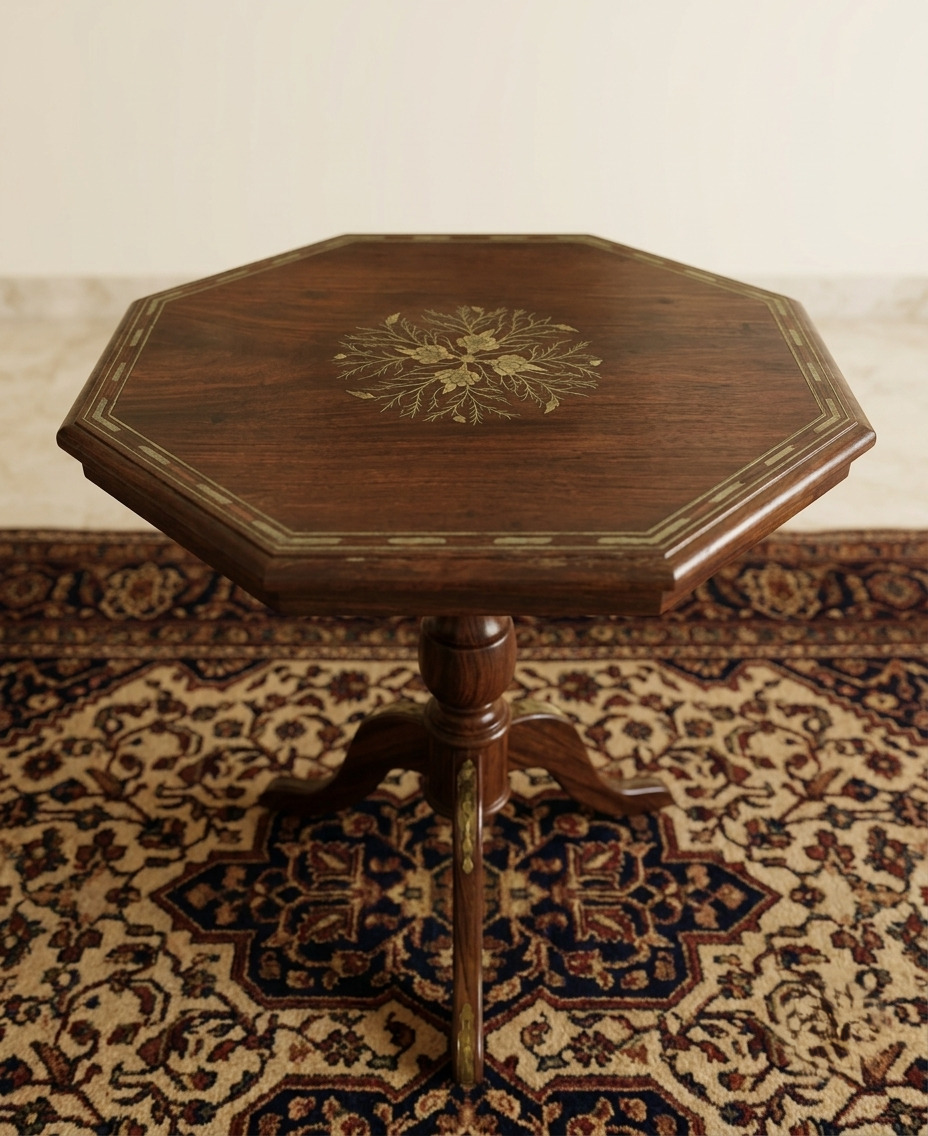 Hexagonal Wooden Table with Brass Inlay
The Appeal of Wood and Metal Together
One of the most attractive features of metal inlay work is the contrast between the two materials.
Wood brings warmth, grain, depth and an organic character. Metal introduces light, definition and a sharper decorative line. When brass or another warm-toned metal is set into dark wood, the design becomes more visible without overwhelming the natural beauty of the timber.
This interplay makes each object visually interesting from different angles. In softer light, the metal may appear subtle; under stronger light, it catches the eye and gives the surface a more animated quality. That is one reason why metal-inlaid furniture and accessories have long been valued as decorative pieces.
The design itself may be traditional or contemporary. Some objects carry floral vines, scrolling foliage and ornamental borders, while others feature geometric bands, medallions, star patterns or simplified linear motifs. This flexibility allows the craft to suit both classic interiors and more modern settings.
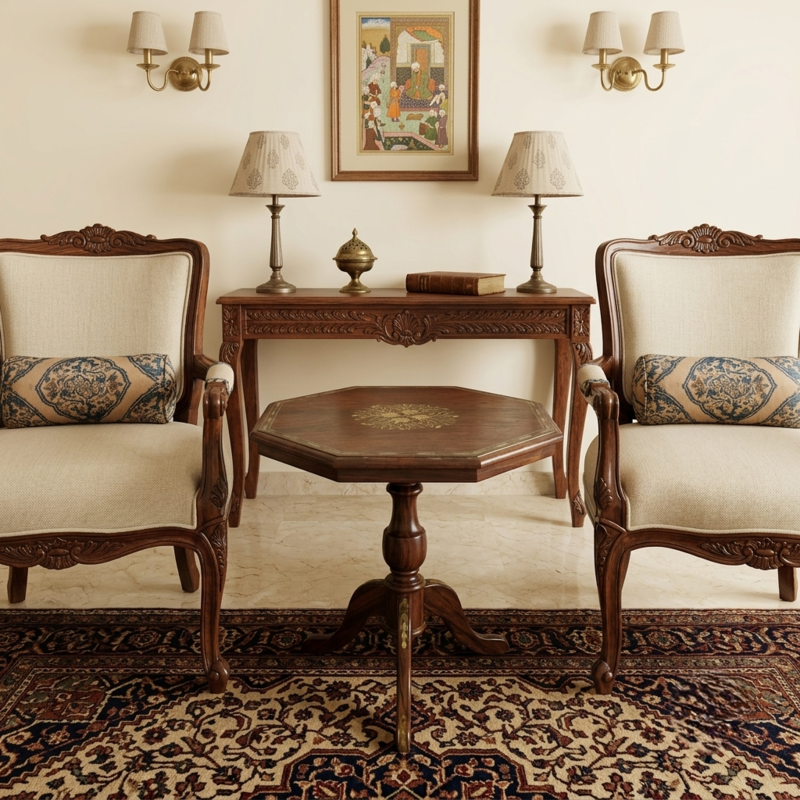 Traditional room with brass-inlaid wood table
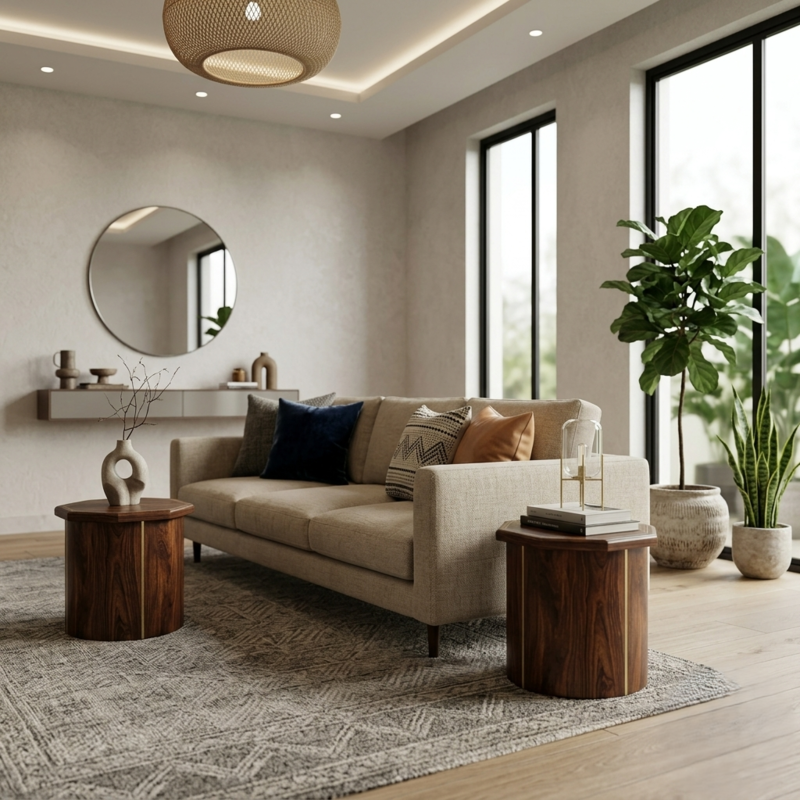 Contemporary room with brass-inlaid wood table
Wood with Metal Inlay Work on Tables and Furniture
Tables are among the most impressive examples of this craft because they offer a generous surface for design.
Table tops, coffee tables, side tables and nesting tables may feature metal inlay as a border, a central medallion or an all-over pattern. In some cases, the decoration is restrained, with a narrow brass line outlining the top. In others, the artisan may create a more elaborate arrangement with repeated motifs extending across the surface.
Inlaid tables work especially well in interior spaces where a single handcrafted piece is intended to serve as a focal point. A coffee table with brass inlay can add character to a sitting room, while a pair of side tables can bring warmth and detail to a bedroom or reading corner.
Because tables are used regularly, craftsmanship and finishing are particularly important. The inlay must be firmly set, and the polished surface should be suitable for practical use while preserving the beauty of the design.
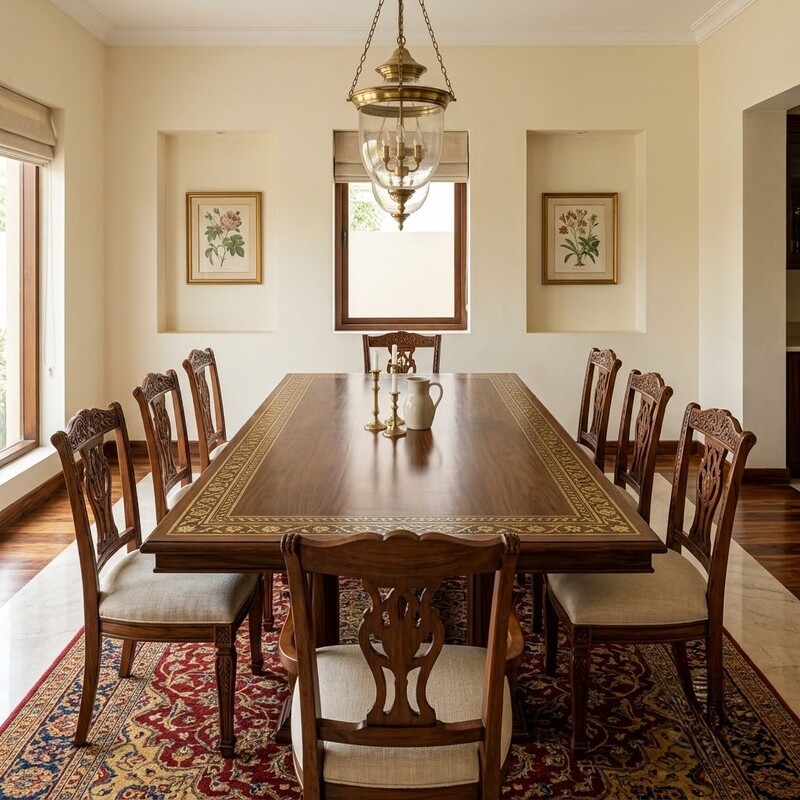 Traditional dining room with inlaid wooden table
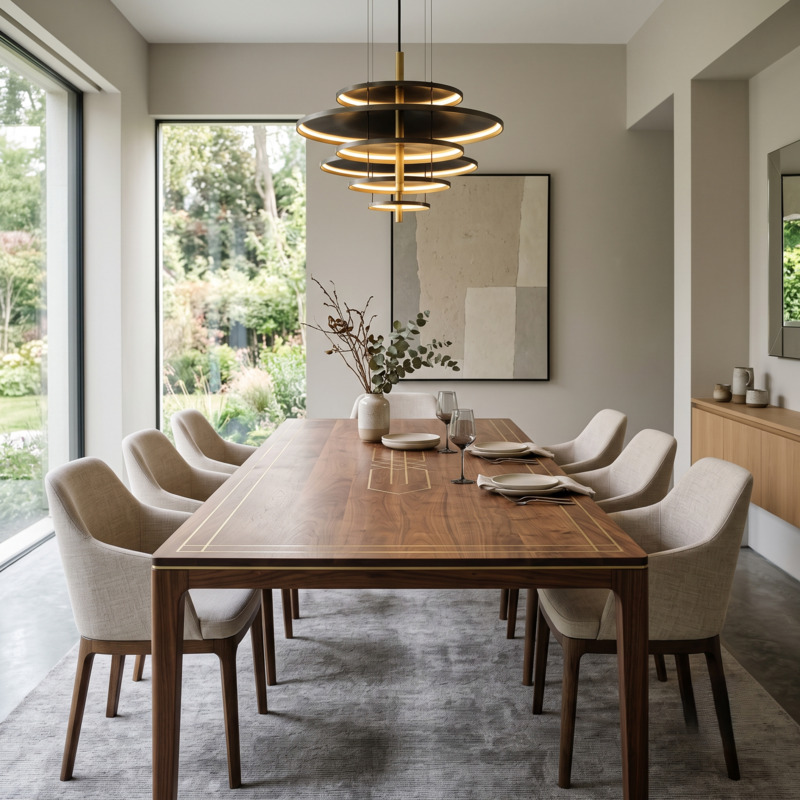 Contemporary dining room with inlaid table
Jewelry Boxes and Keepsake Objects
Jewelry boxes are another excellent expression of wood with metal inlay work. On a smaller scale, the precision of the technique becomes even more important, as every line and detail is more visible.
A jewelry box may feature floral sprays, geometric borders, corner motifs or a combination of patterns across the lid and sides. Some are designed simply for storage, while others are made as decorative keepsake pieces in their own right. Compartments, velvet-lined interiors and fitted trays may be included depending on the design and intended use.
These boxes make attractive gifts and are also well suited to online and boutique retail because they combine utility, decorative appeal and manageable size.
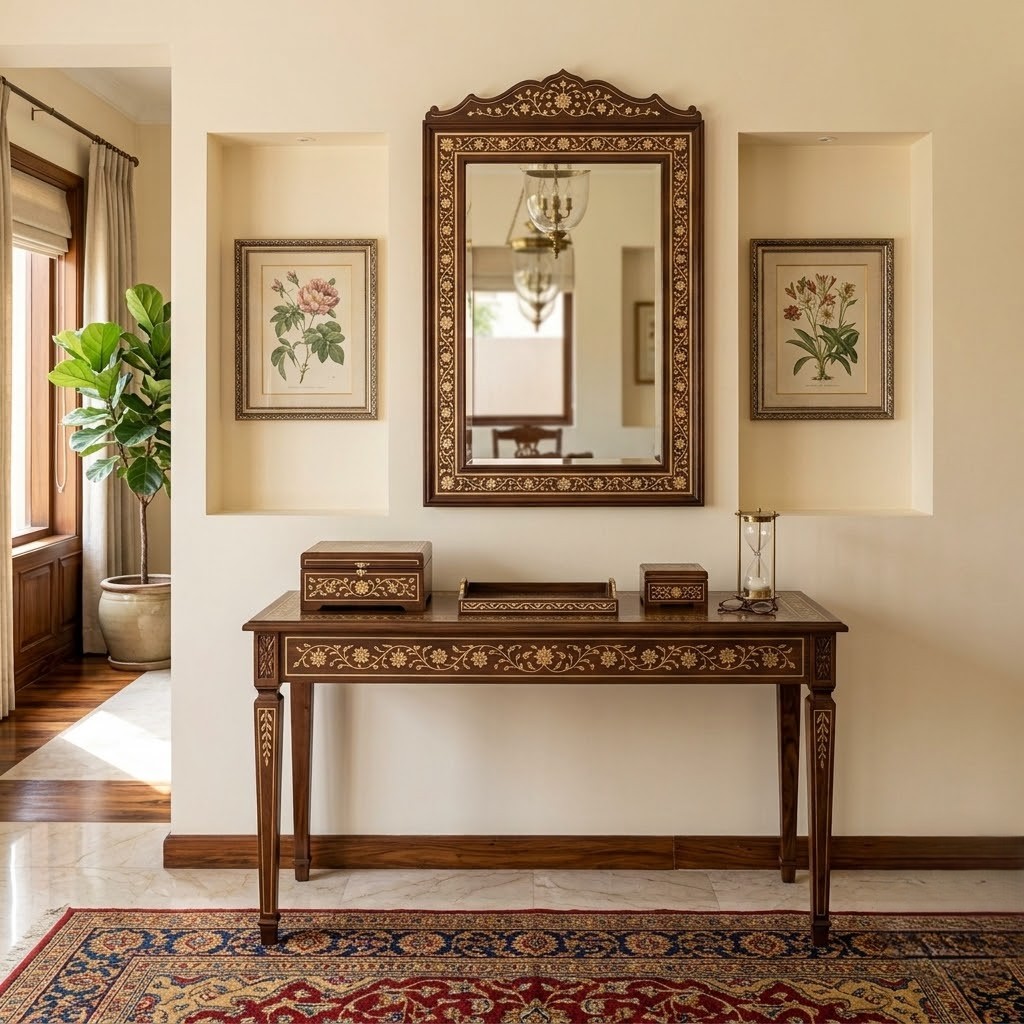 Traditional console with inlaid wood accessories
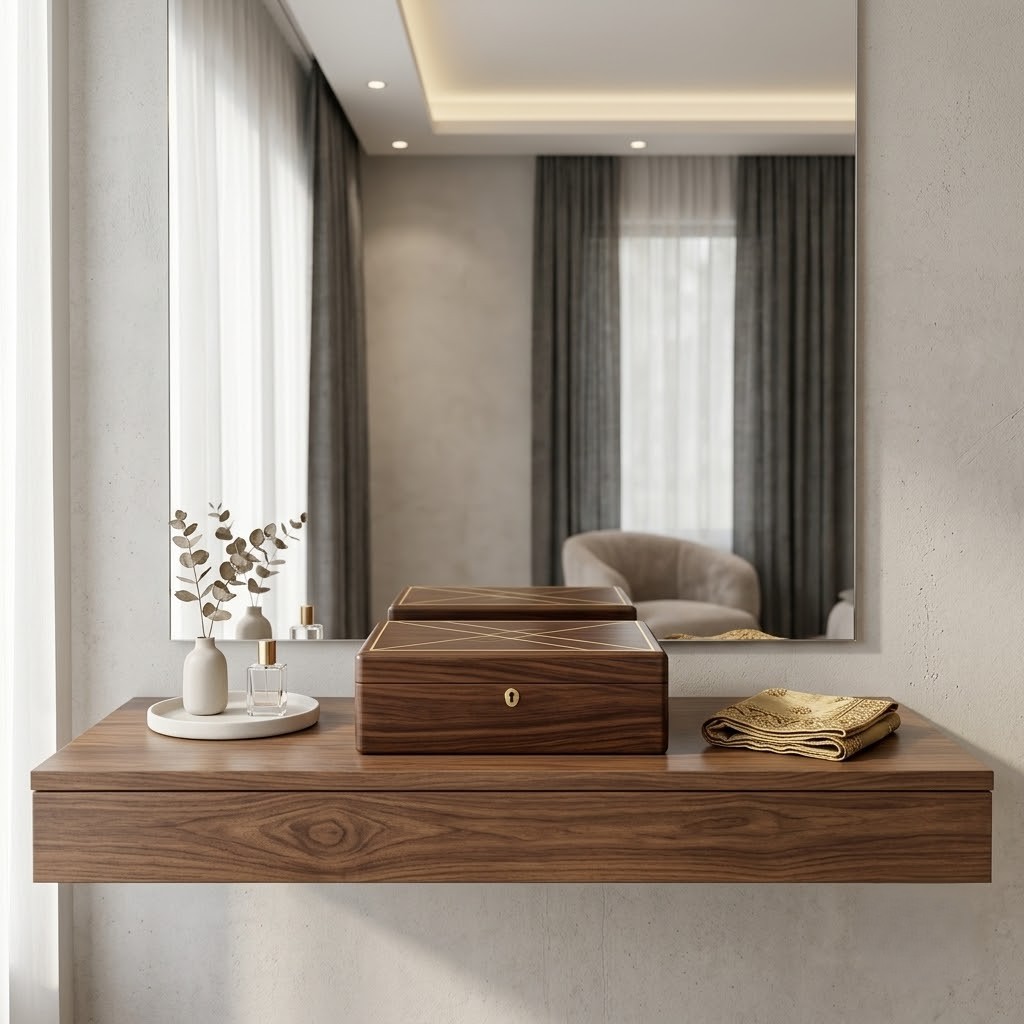 Contemporary console with inlaid wood accessories
Chess Boards with Metal Inlay Work
Chess boards with metal inlay work add a particularly elegant dimension to this craft.
A chess board is already a structured object, defined by its grid and balanced composition. When metal inlay is incorporated into the border, surrounding frame or supporting box, the result can be both sophisticated and visually distinctive. In some designs, the inlay may be used sparingly around the perimeter, while in others it may appear as decorative corner details or ornamental bands around the board.
Chess boards are appealing because they combine artistry with function. They may be appreciated by those who play the game, but they also have value as display pieces, conversation pieces and collectible handcrafted objects. A well-made wooden chess board with metal inlay can sit comfortably in a study, living room, office or library setting.
For artisans and designers, chess boards also offer room for product development. Matching chess pieces, storage compartments and coordinated gift packaging can further enhance their appeal.
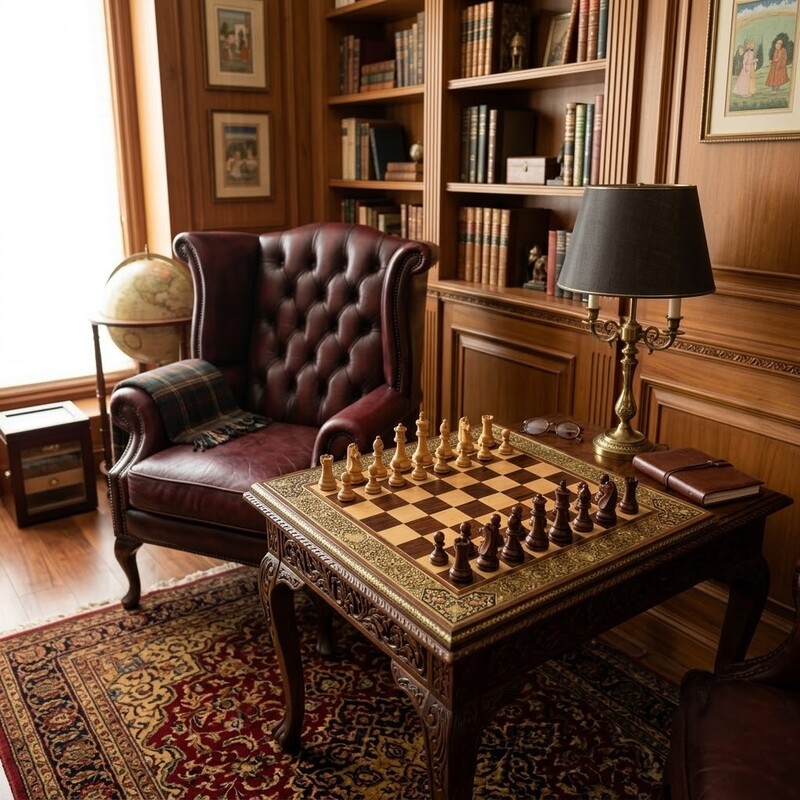 Traditional study with brass-inlaid chess board
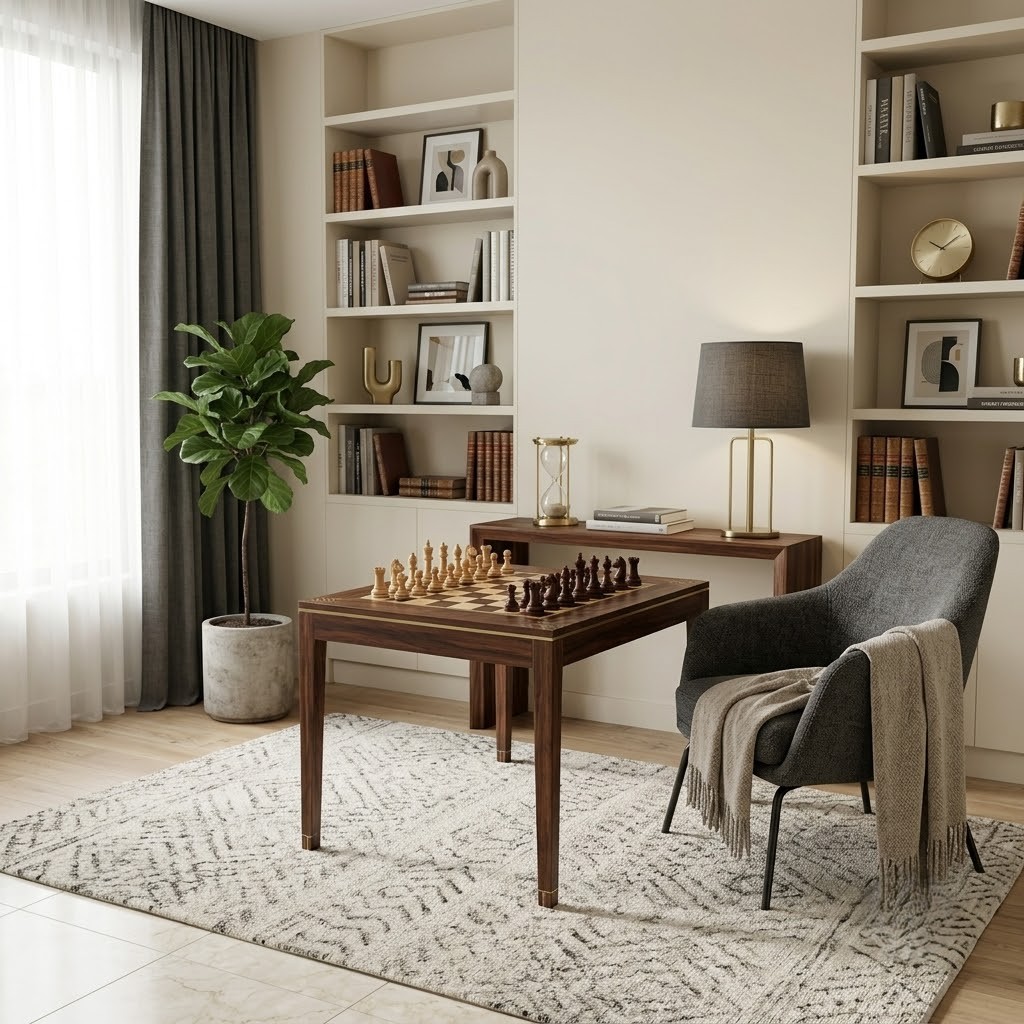 Contemporary library with metal-inlaid chess set
Other Objects Made with Metal Inlay Work
In addition to tables, jewelry boxes and chess boards, wood with metal inlay work may also be used on a variety of decorative and functional products, including:
- Trays and serving accessories
- Coasters and placemats
- Pen holders and desk organisers
- Mirror and photo frames
- Tissue boxes
- Decorative wall panels
- Document boxes and keepsake cases
- Small cabinets and side pieces
- Gift items and presentation boxes
These objects allow the craft to be appreciated at different price points and in different settings. They also make it easier for smaller workshops and emerging brands to build a curated product line.
Design Value in Contemporary Interiors
Although rooted in traditional craftsmanship, wood with metal inlay work can adapt very well to contemporary taste.
A modern home may not require highly ornate furniture, but it can still accommodate a handcrafted table, a decorative jewellery box or a refined chess board. Simpler patterns, cleaner silhouettes and selective use of metal allow the work to feel current while preserving its artisanal identity.
Designers and homeowners often look for statement pieces that introduce texture, warmth and individuality into a space. Wood with metal inlay can do exactly that, whether through a large centre table or a smaller decorative object placed on a console, study desk or sideboard.
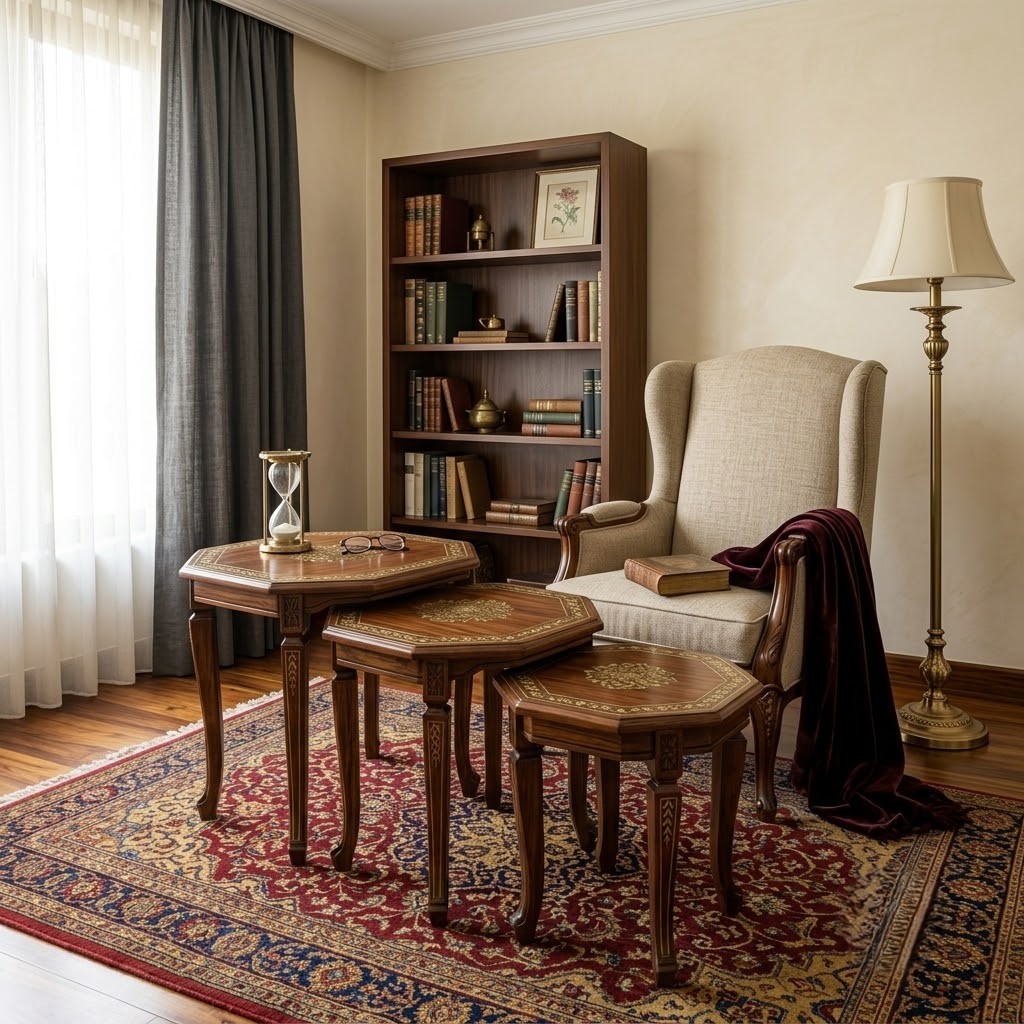 Traditional reading corner with inlaid nesting tables
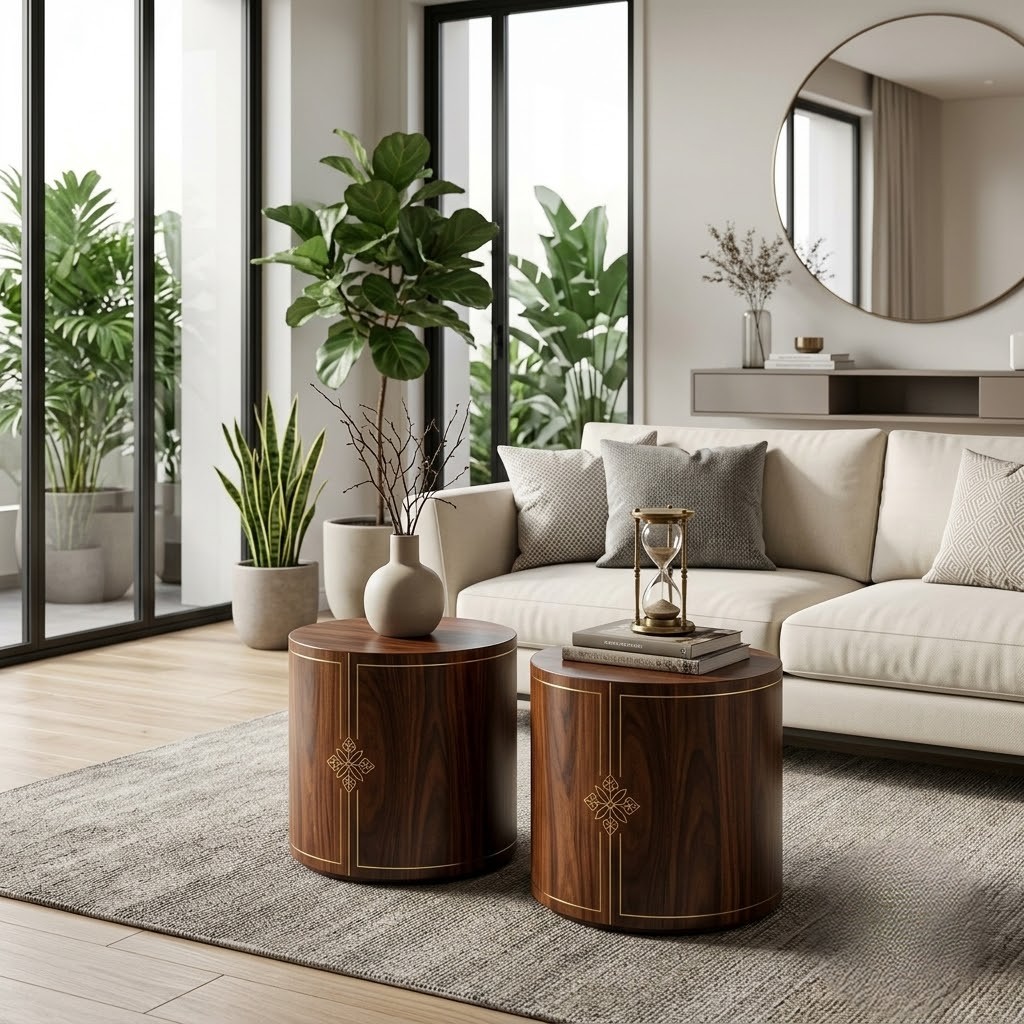 Contemporary lounge with metal-inlaid side tables
Quality, Craftsmanship and Enterprise Potential
The lasting value of these products depends on workmanship. The wood should be properly seasoned, the metal securely embedded, and the finish smooth and durable. Fine details, accurate symmetry and neat edges all contribute to the overall quality of the piece.
From an enterprise perspective, this craft also offers scope for growth. Larger items such as tables may appeal to interior clients, while smaller objects such as jewellery boxes and chess boards can be developed for gifting, boutique retail and online sales. Women entrepreneurs, designers and curators can play an important role in product development, branding, packaging, quality control and access to market.
A Craft of Contrast and Refinement
Wood with metal inlay work of Pakistan reflects the beauty that emerges when contrasting materials are brought together with care and precision. The natural richness of wood and the luminous detail of metal create objects that are practical, decorative and distinctive.
Whether seen in table tops, jewelry boxes, chess boards or smaller handcrafted accessories, this technique continues to offer both aesthetic appeal and creative potential. It is a craft that deserves appreciation not only for the finished object, but also for the skill, patience and design judgement required to produce it.
How Wood with Metal Inlay Work Is Created
One of the most attractive features of metal inlay work is the contrast between the two materials.
Wood brings warmth, grain, depth and an organic character. Metal introduces light, definition and a sharper decorative line. When brass or another warm-toned metal is set into dark wood, the design becomes more visible without overwhelming the natural beauty of the timber.
This interplay makes each object visually interesting from different angles. In softer light, the metal may appear subtle; under stronger light, it catches the eye and gives the surface a more animated quality. That is one reason why metal-inlaid furniture and accessories have long been valued as decorative pieces.
The design itself may be traditional or contemporary. Some objects carry floral vines, scrolling foliage and ornamental borders, while others feature geometric bands, medallions, star patterns or simplified linear motifs. This flexibility allows the craft to suit both classic interiors and more modern settings.
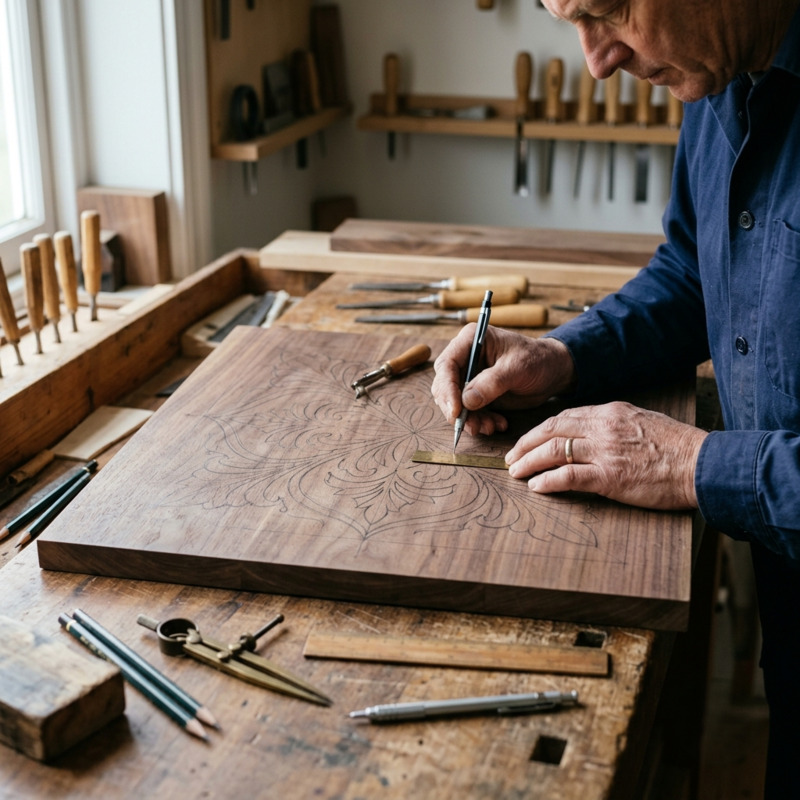 Marking the inlay pattern on wood
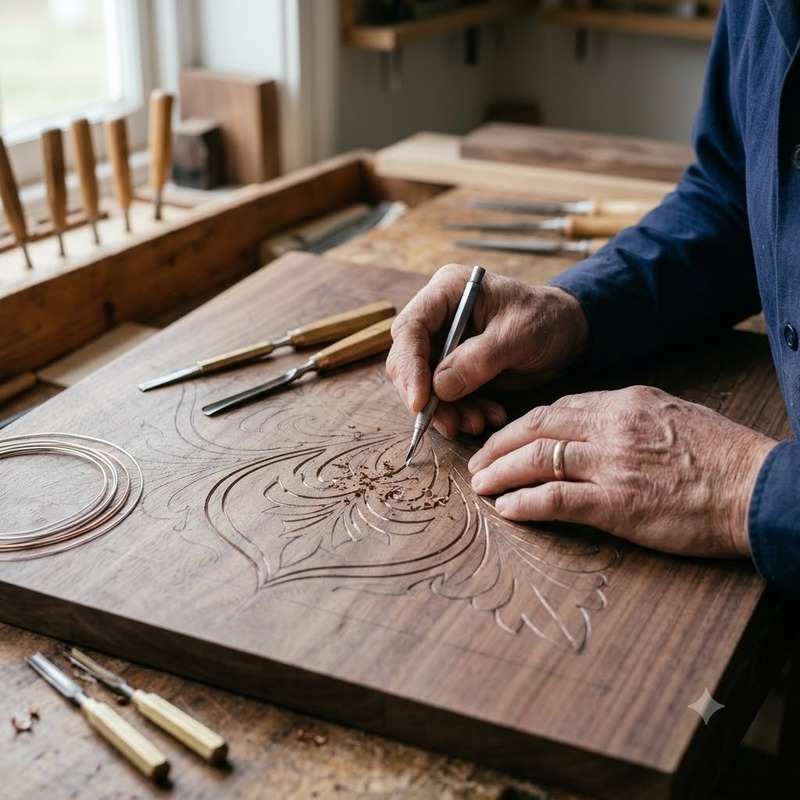 Cutting fine grooves for the metal
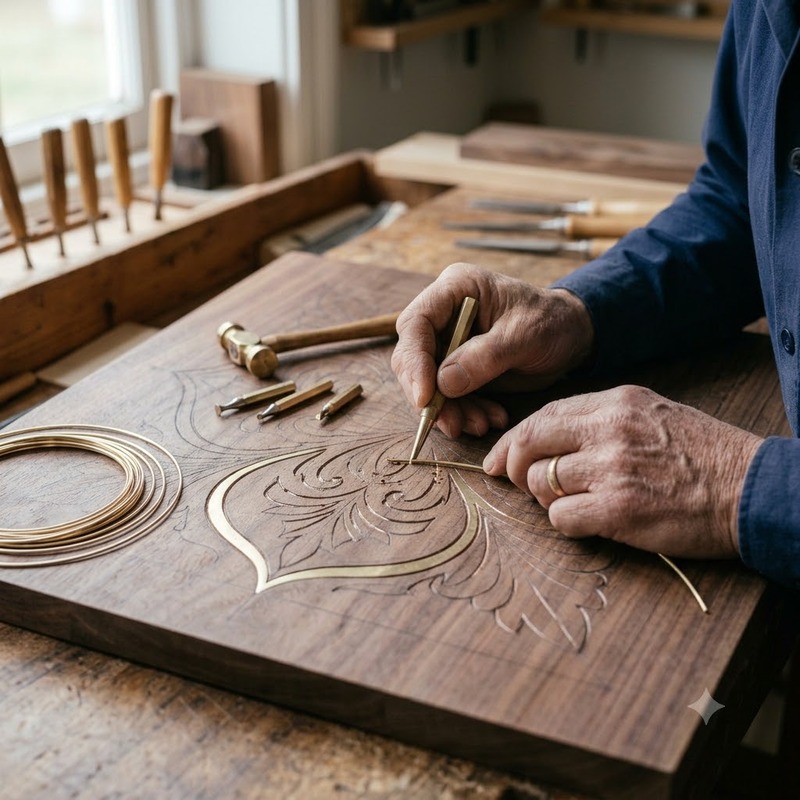 Setting metal into the carved wood
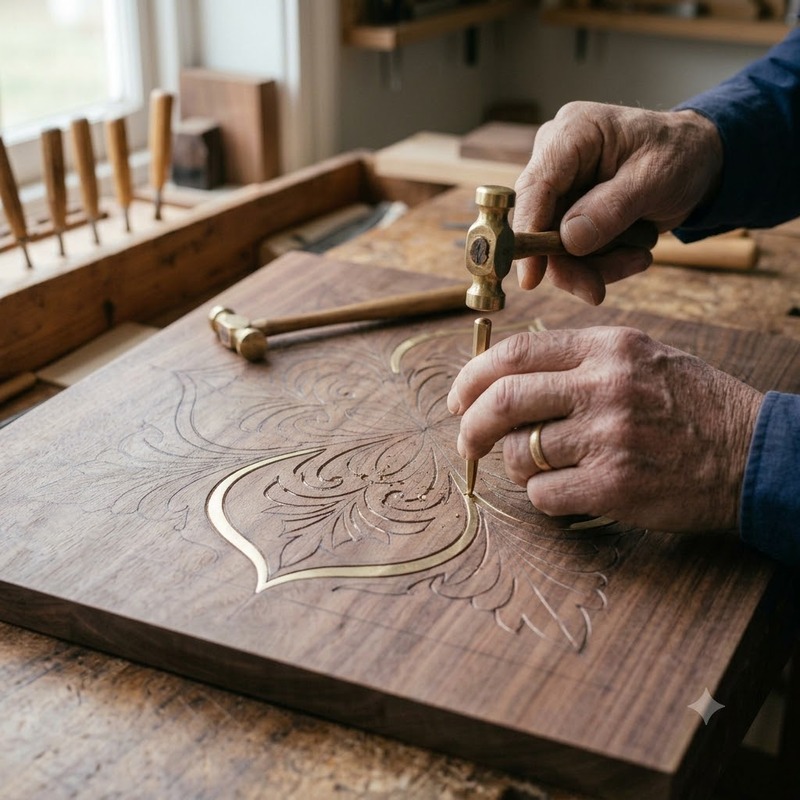 Securing the metal inlay by hand
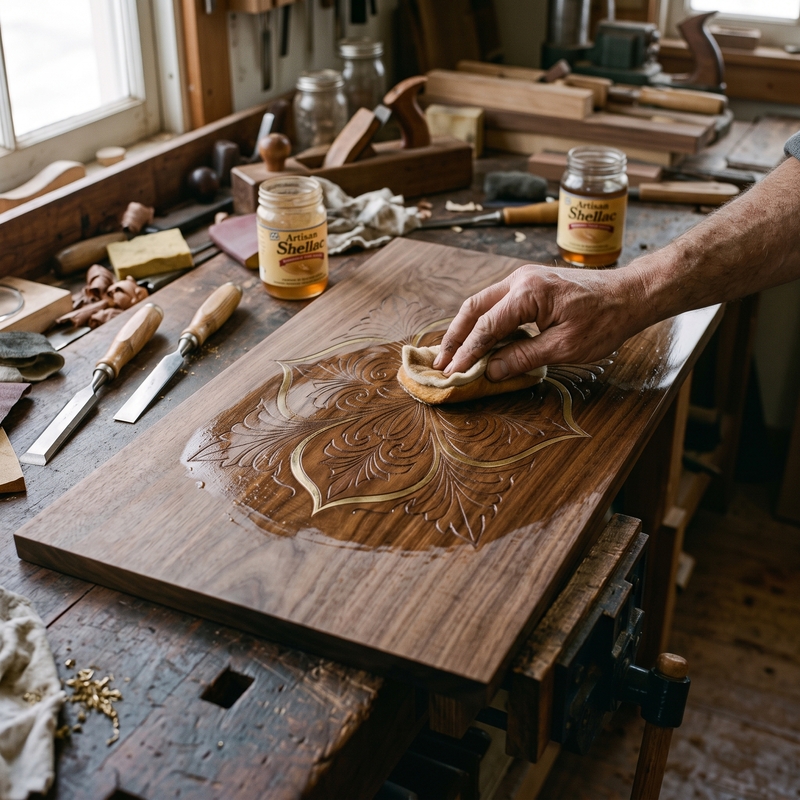 Smoothing the wood and metal surface
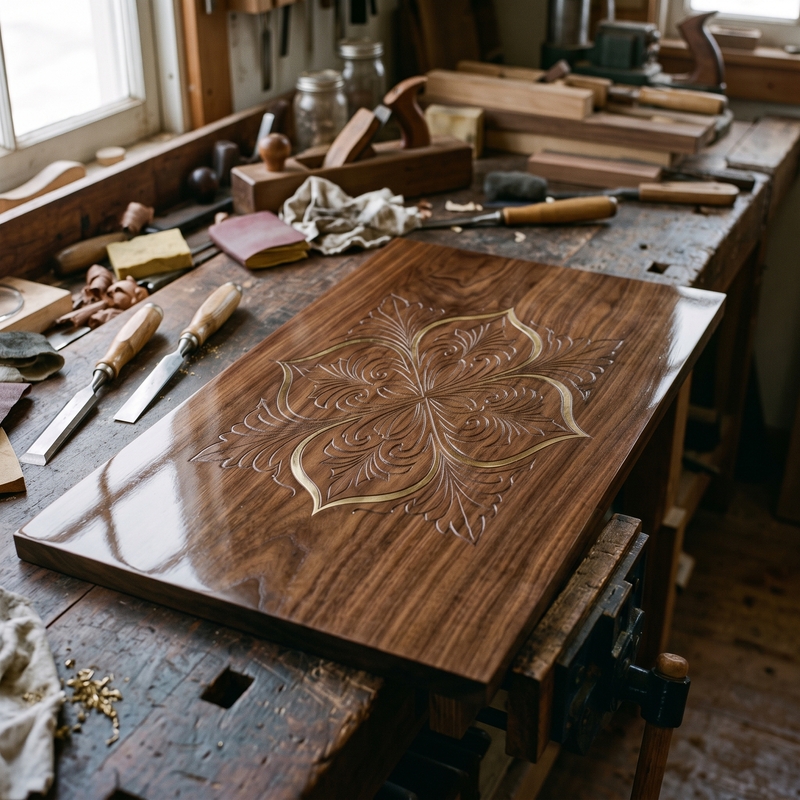 Finished wood with metal inlay
- Home
- Products and Trades
- Wood With Metal Inlay Work

Newsletter Opt-in
Recent Articles


-
Wood with Metal Inlay Work
Aug 15, 26 03:54 AM
 Wood with metal inlay work of Pakistan shows how tables, boxes and chess boards combine function and ornament for interiors, gifting and display.
 -
Bridal Dupatta of Pakistan: Craft and Elegance
Jul 23, 26 02:59 PM
 Bridal dupatta of Pakistan reflects intricate embroidery, rich fabrics, and traditional craftsmanship in elegant wedding attire.
 -
Jamawar Fabric of Pakistan: Woven Heritage and Timeless Design
Jun 17, 26 03:15 PM
 Jamawar fabric of Pakistan is known for intricate woven paisley motifs, rich textile heritage, and timeless elegance in shawls, garments, and décor.