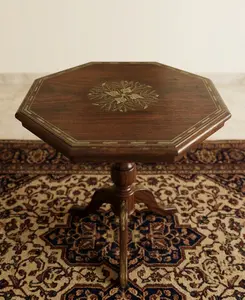
Marble Table Tops with Inlay Work
Marble table tops with inlay work art is an elegant fusion of timeless craftsmanship and luxurious natural stone. This decorative art transforms plain marble surfaces into breathtaking masterpieces that elevate interior spaces with unmatched beauty and artistry. Whether you’re a homeowner, interior designer, or marble enthusiast, understanding the origins, techniques, and types of marbles—especially those from Pakistan—will deepen your appreciation for this refined craft.
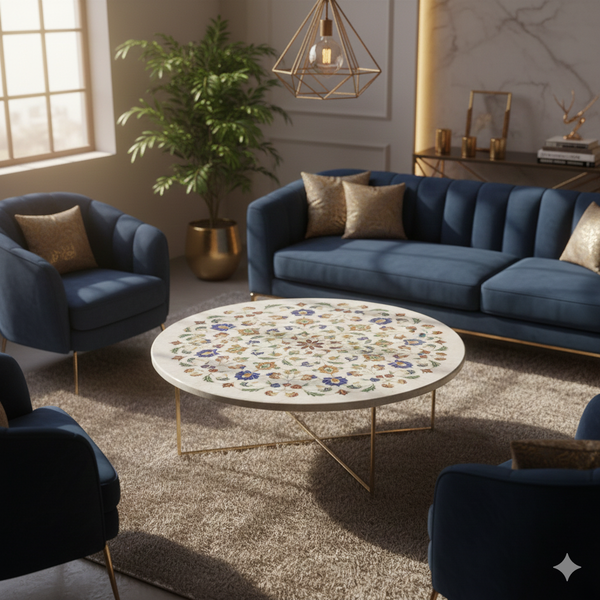 Marble Table Top With Inlay Work
Marble Table Tops with Inlay Work: History, Craftsmanship & Marble
Marble table tops with inlay work represents a timeless blend of craftsmanship, cultural heritage, and natural stone beauty. For centuries, marble has elevated architecture and interior décor, while inlay work has added intricate artistic expression to this already elegant material. Today, marble inlay table tops are admired for their ornamental richness, durability, and uniqueness. To appreciate this art fully, it is insightful to explore the origins of marble craftsmanship, the technique behind inlay work, and the remarkable varieties of marble found in Pakistan.

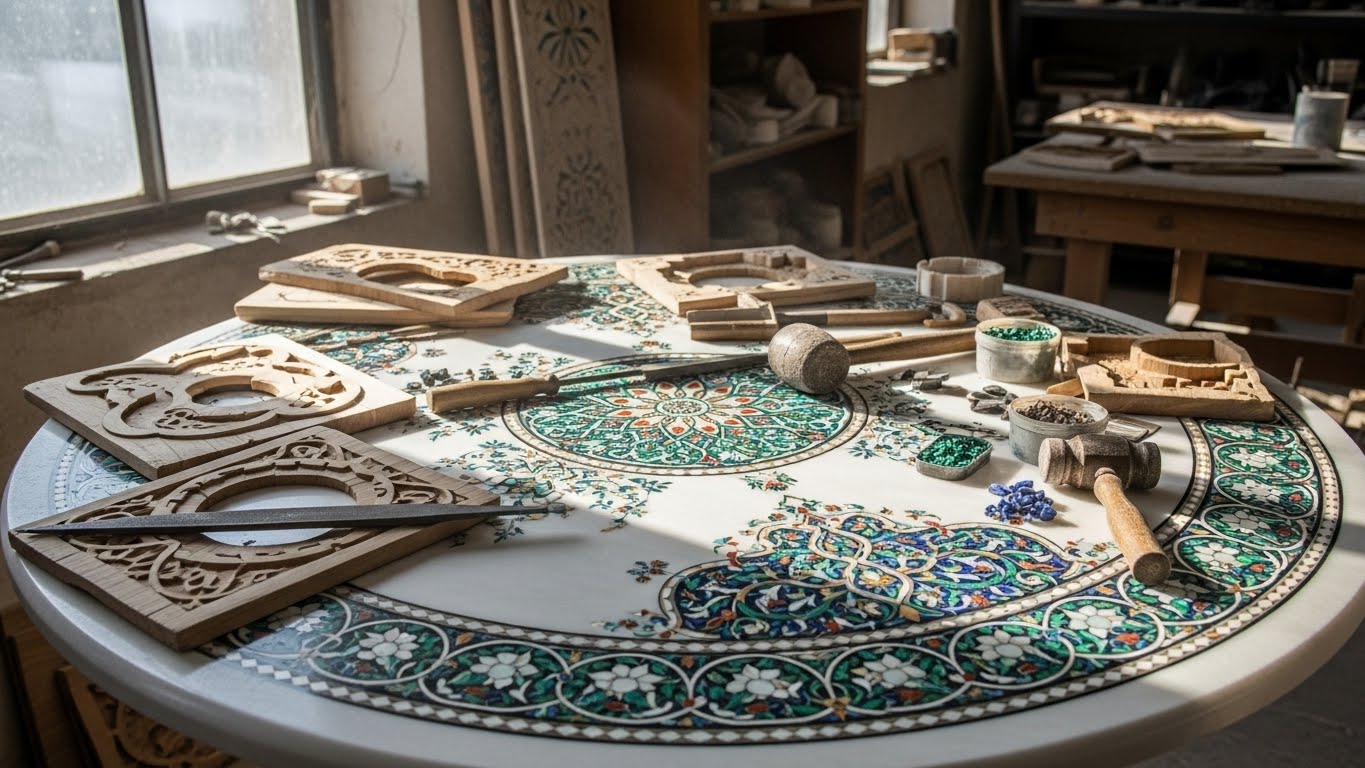

The Historical Origins of Marble Craftsmanship
Marble has served civilization for thousands of years. The ancient Greeks valued marble for its smooth texture and ability to hold fine details in sculpture. Greek temples, statues of deities, and ornamental columns carved from marble set early standards for artistic excellence.
The Romans expanded the use of marble, quarrying large quantities and integrating the stone into public buildings, baths, amphitheaters, and villas. Structures such as the Roman Forum and Pantheon demonstrate how marble could symbolize prestige while remaining functional.
During the Renaissance, marble saw a revival as artists like Michelangelo transformed large blocks into masterpieces such as the Statue of David. Marble became synonymous with refinement, wealth, and cultural achievement — values reflected in both architecture and furniture.
In South Asia, marble craftsmanship reached a golden peak during the Mughal era. The Taj Mahal, completed in the mid-17th century, stands as the world's most famous example of white marble construction combined with gemstone inlay. Its intricate floral motifs, symmetrical patterns, and glowing stone surfaces remain a global symbol of love and artistic dedication.
Marble Table Tops with Inlay Work - The Art of the Work
Marble inlay, also known historically as pietra dura, Italian for 'hard stone', involves embedding cut stones into carved cavities on a marble surface. The process produces decorative designs that appear painted yet are entirely made of stone. For table tops, this technique transforms plain slabs into elegant centerpieces suitable for homes, offices, hotels, and ceremonial spaces.
How Marble Inlay Is Done - Steps in Marble Inlay Work
- Design Creation: Artists begin with a detailed sketch or pattern. Traditional motifs include florals, vines, paisleys, and geometric shapes.Marble Selection: A base marble slab is chosen for its color and surface quality.
- Surface
Preparation
A solid marble slab is selected based on strength, polish potential, and color tone. Table tops often use white, cream, black, or richly veined marbles. - Carving
the Marble Base
Craftsmen carefully carve grooves following the design outlines. Precision is vital to ensure the inlaid stones fit perfectly. - Cutting
the Inlay Pieces
Semi-precious stones — such as jasper, malachite, onyx, lapis lazuli, carnelian, and agate — are sliced and shaped using handheld tools. - Fitting
the Stones
Each stone piece is placed into its carved cavity using natural or resin-based adhesives. - Polishing
the Final Surface
The completed piece is polished until the inlay and marble sit flush, creating a smooth, seamless surface with stunning visual depth.

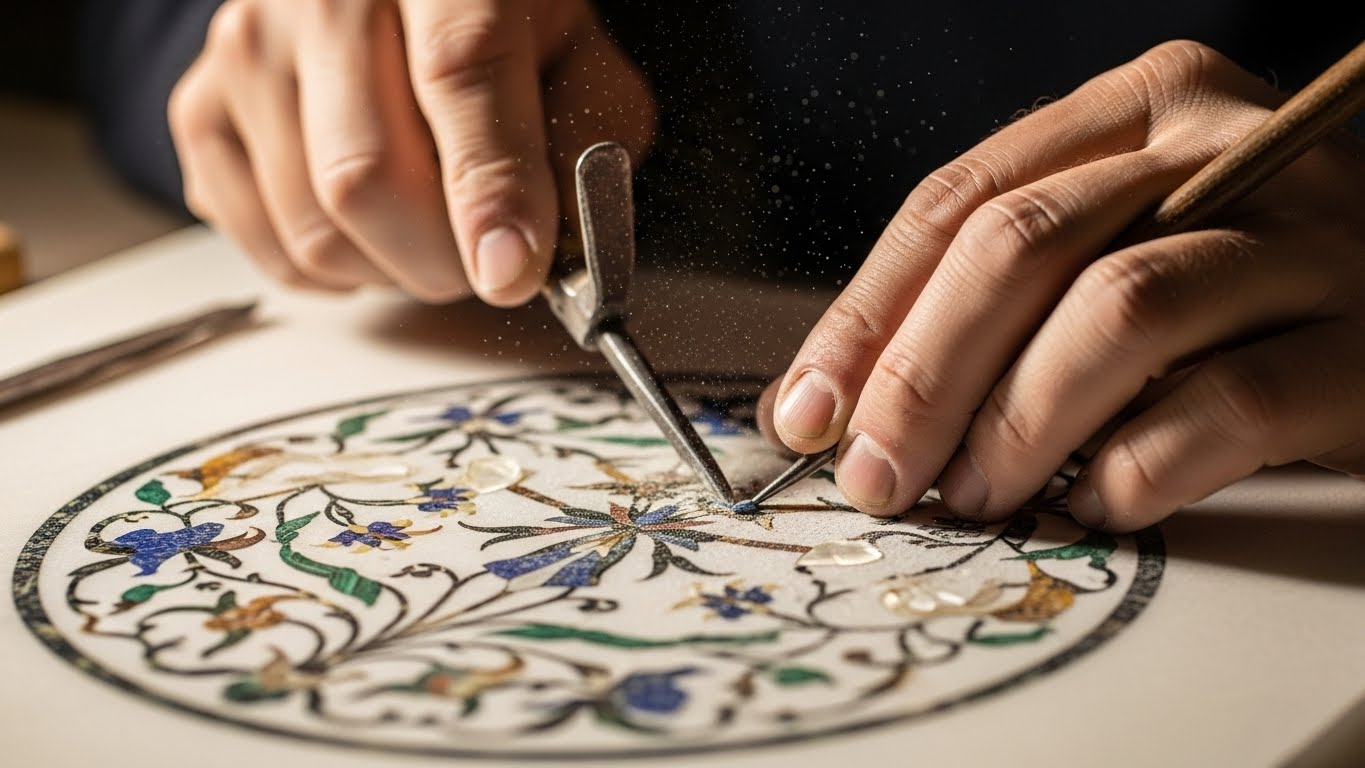
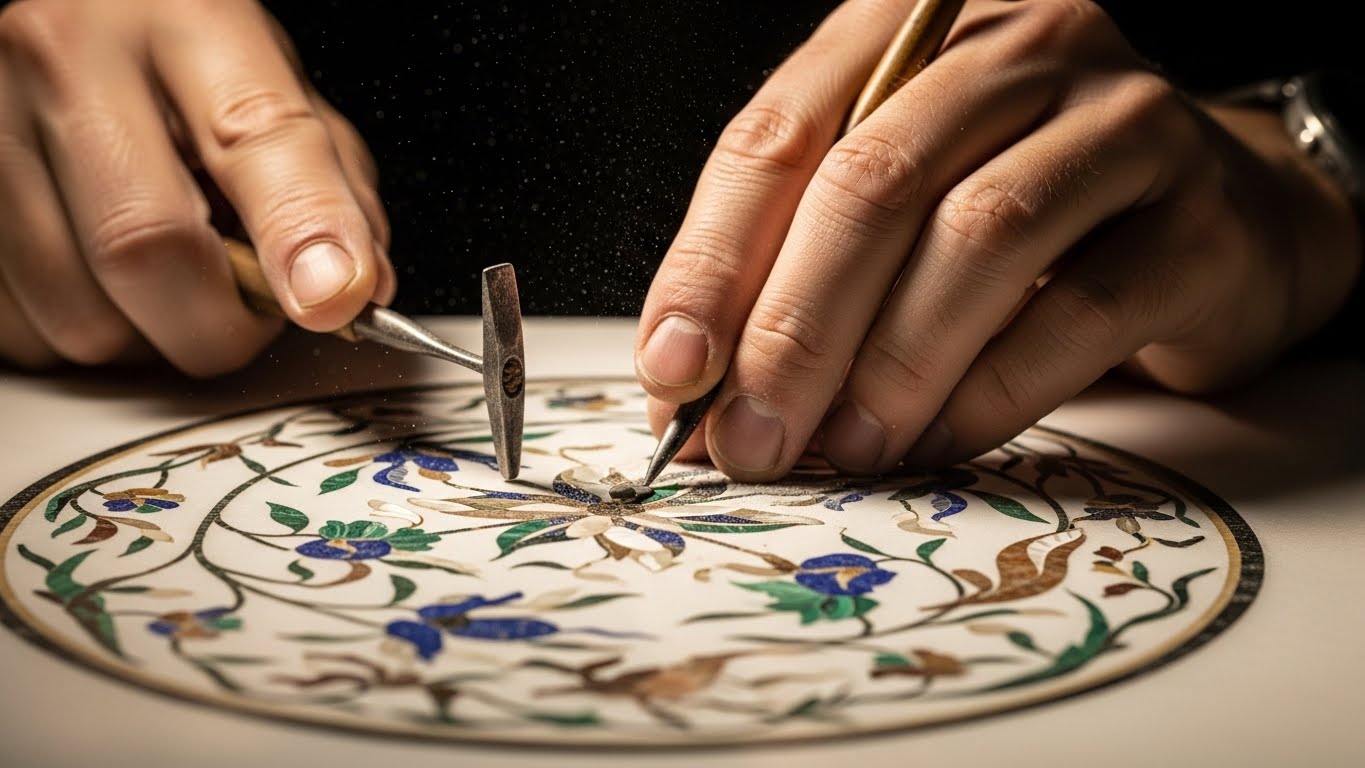
This meticulous process demands patience, precision, and a deep understanding of stone materials. Finished inlay work on table tops brings together artistry and function, creating furniture that is both decorative and practical.
The result is artwork that resists fading, does not peel like paint, and lasts generations with proper care. Marble inlay table tops can feature traditional Mughal flowers, modern patterns, or custom family emblems, blending centuries-old techniques with contemporary style.
Types of Marble Used in Inlay Table Tops
Marble varies widely depending on mineral composition and geological formation. The choice of marble influences durability, translucency, color uniformity, and polishing quality. Below are some commonly used marbles, with a special focus on those mined in Pakistan.
Internationally Known Marbles
- Carrara Marble (Italy) – soft white with light gray veins, ideal for subtle elegance
- Calacatta Marble (Italy) – striking bold veining on a bright background, associated with luxury
- Emperador Marble (Spain) – deep brown tones with tangled white veining, warm and rich in character
- Statuario Marble (Italy) – brilliant white with structured gray lines, prized by sculptors.
These marbles are used worldwide for sculpture, architecture, and interior design, including table tops.
Marble from Pakistan: A Rich Geological Heritage
Pakistan is home to significant marble reserves, producing varied stone colors and patterns admired worldwide. Marble from Pakistan is known for its durability, natural sheen, and suitability for both construction and decorative applications - including inlay work.
Below are notable varieties mined in Pakistan:
Ziarat White Marble
Known for its pure white tone, Ziarat White is often compared with classic European whites. Its clean appearance makes it ideal for elegant surfaces, including inlay table tops requiring contrast.
Botticino Cream Marble
Warm beige with subtle veining, Botticino from Pakistan offers a neutral tone that pairs beautifully with dark or colorful inlay stones.
Black & Gold Marble
A dramatic stone featuring deep black fields intersected by golden veins. This type provides a stunning contrast base for vivid inlay motifs.
Verona Marble
Light beige to cream with soft markings, Verona creates a calm, natural look suitable for both traditional and contemporary spaces.
Onyx from Pakistan
Perhaps the most unique of all, onyx from Pakistan — especially honey and green onyx — is valued for its translucency. When backlit, the stone glows, making it perfect for artistic table tops, lamps, and reception counters.
These varieties give artists and designers rich possibilities when crafting inlay table tops that are both decorative and functional.
Why Marble Table Tops with Inlay Work Stand Out
- Artistry
& Function Combined
Unlike ordinary marble tables, inlay work transforms furniture into durable artwork. - Longevity
With sealing and care, marble surfaces can last decades while maintaining their brilliance. - Uniqueness
No two slabs or inlay stones are ever identical, ensuring individuality in every piece. - Design
Flexibility
From Mughal floral patterns to minimalist styles, marble inlay adapts to any interior.
Caring for Marble Inlay Table Tops
To maintain a polished appearance:
- Seal the surface periodically to prevent staining
- Avoid acidic cleaners like lemon or vinegar
- Use coasters and placemats to prevent etching
- Clean with mild soap and soft cloths
With these steps, marble inlay table tops stay radiant for generations.
Conclusion
Marble inlay work on table tops embodies centuries of craftsmanship, cultural history, and natural beauty. The combination of durable marble, semi-precious stones, and patient artistry results in timeless furniture that continues to inspire admiration worldwide. With remarkable stone varieties found in Pakistan and traditional techniques that remain relevant today, marble inlay table tops offer not just utility but artistic legacy — a celebration of stone, skill, and heritage.
- Home
- Products and Trades
- Marble Table Tops with Inlay Work

Newsletter Opt-in
Recent Articles


-
Wood with Metal Inlay Work
Aug 15, 26 03:54 AM
 Wood with metal inlay work of Pakistan shows how tables, boxes and chess boards combine function and ornament for interiors, gifting and display.
 -
Bridal Dupatta of Pakistan: Craft and Elegance
Jul 23, 26 02:59 PM
 Bridal dupatta of Pakistan reflects intricate embroidery, rich fabrics, and traditional craftsmanship in elegant wedding attire.
 -
Jamawar Fabric of Pakistan: Woven Heritage and Timeless Design
Jun 17, 26 03:15 PM
 Jamawar fabric of Pakistan is known for intricate woven paisley motifs, rich textile heritage, and timeless elegance in shawls, garments, and décor.