Woven tapestry Art from Pakistan
Woven Tapestry Art from Pakistan - A Highly Specialized Skill
Woven Tapestry Art from Pakistan is a highly specialized skill found within the textile manufacturing hubs of Pakistan, representing a fusion of classical design and industrial capability. Unlike printed textiles or embroidery, true woven tapestry art is a high-relief textile where the entire image - from still life to floral narratives - is created thread by thread on the loom.
 Woven Tapestry Calligraphic Art
 Woven Tapestry Calligraphic Art
A Craft Discovered Inside a Modern Textile Mill
Woven tapestry art has long been admired for its ability to transform thread into visual storytelling—capturing depth, texture, and emotion in ways few other mediums can. During my recent visit to a weaving factory in Pakistan, primarily known for its upholstery fabric production, I made an unexpected discovery. While walking through the facility, I noticed several striking woven tapestries hanging on the walls: still-life scenes, floral compositions, and calligraphy pieces displayed almost like an informal gallery.
Curious about them, I asked the team about their origin. They explained that although their primary business revolves around upholstery fabric, they also produce woven tapestry art in-house for select clients who request these special pieces. The tapestries are not mass-produced but created to meet specific artistic commissions, allowing the factory to showcase another dimension of its craftsmanship. It was fascinating to learn how, within an industrial setting focused on commercial textiles, such refined and expressive artworks are created quietly and purposefully.
Calligraphy Woven into Art and Tradition
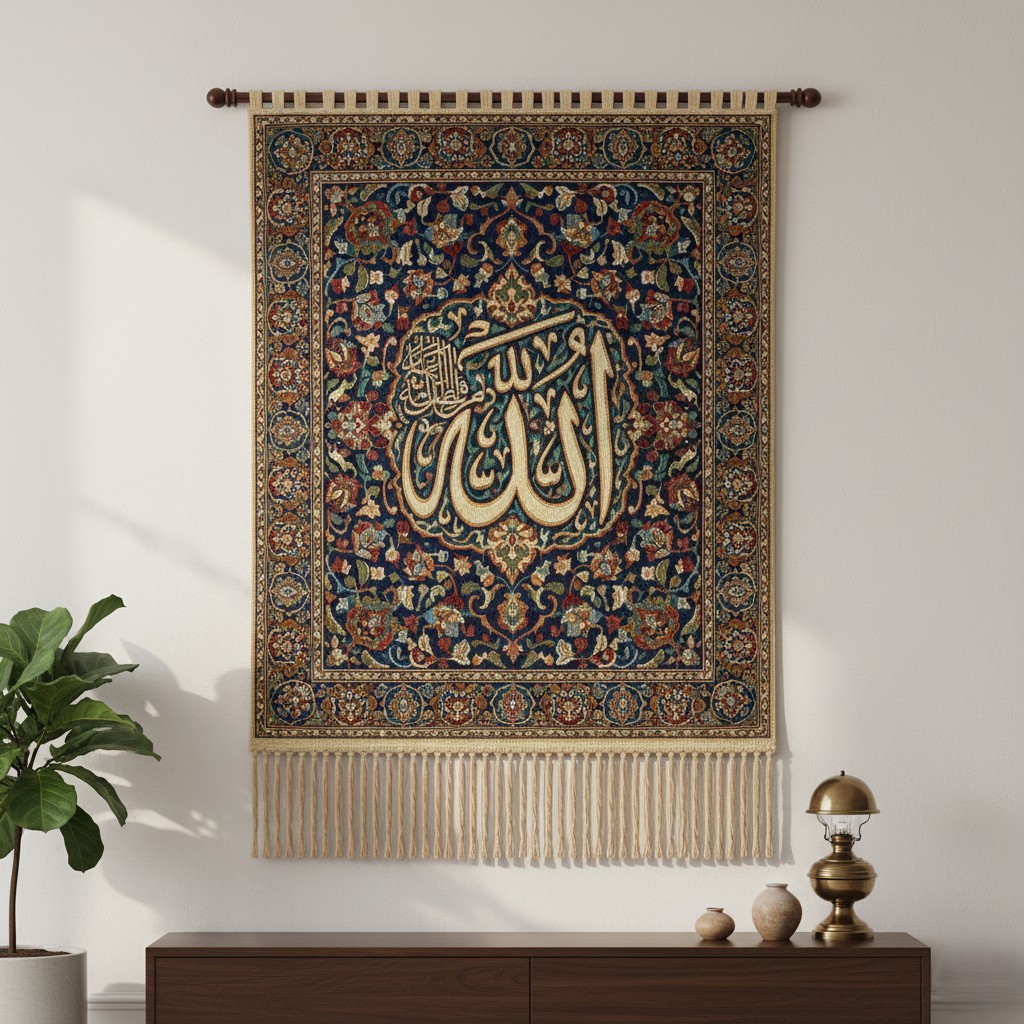
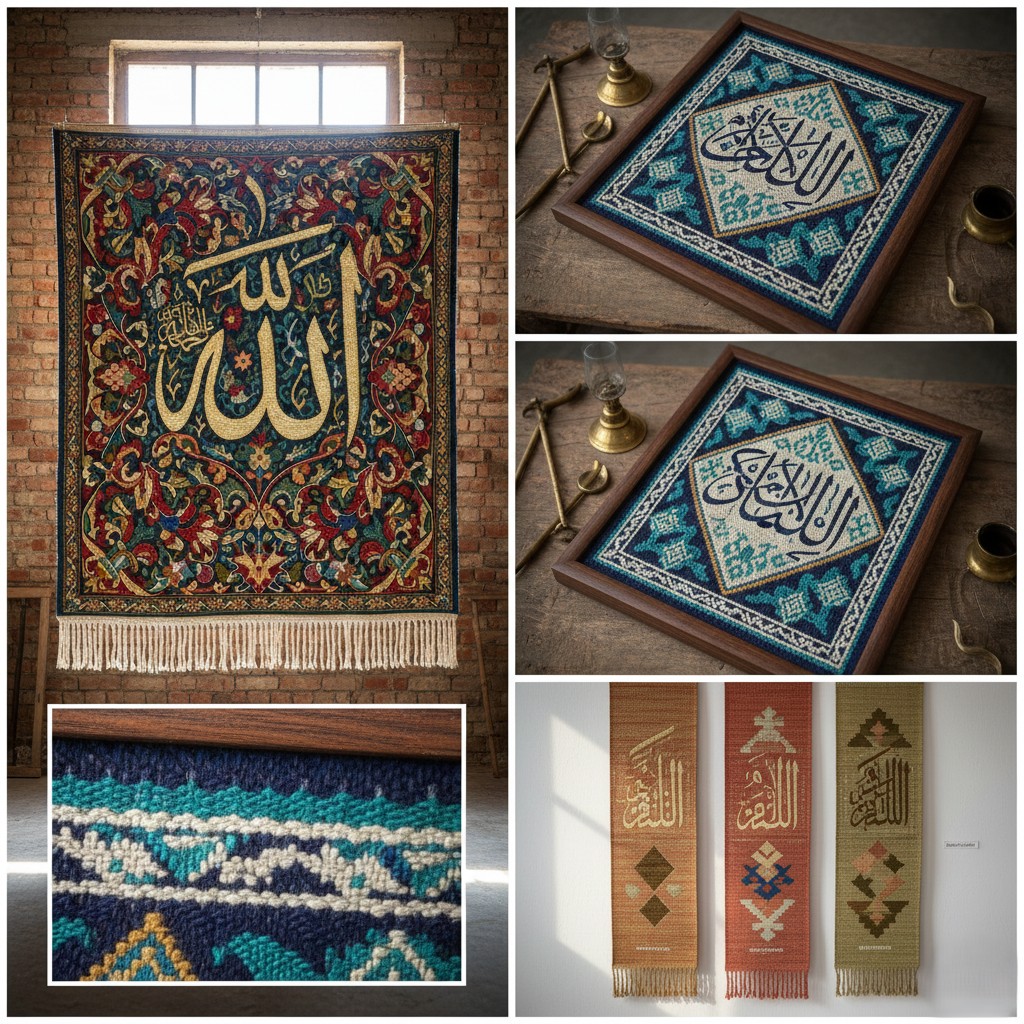
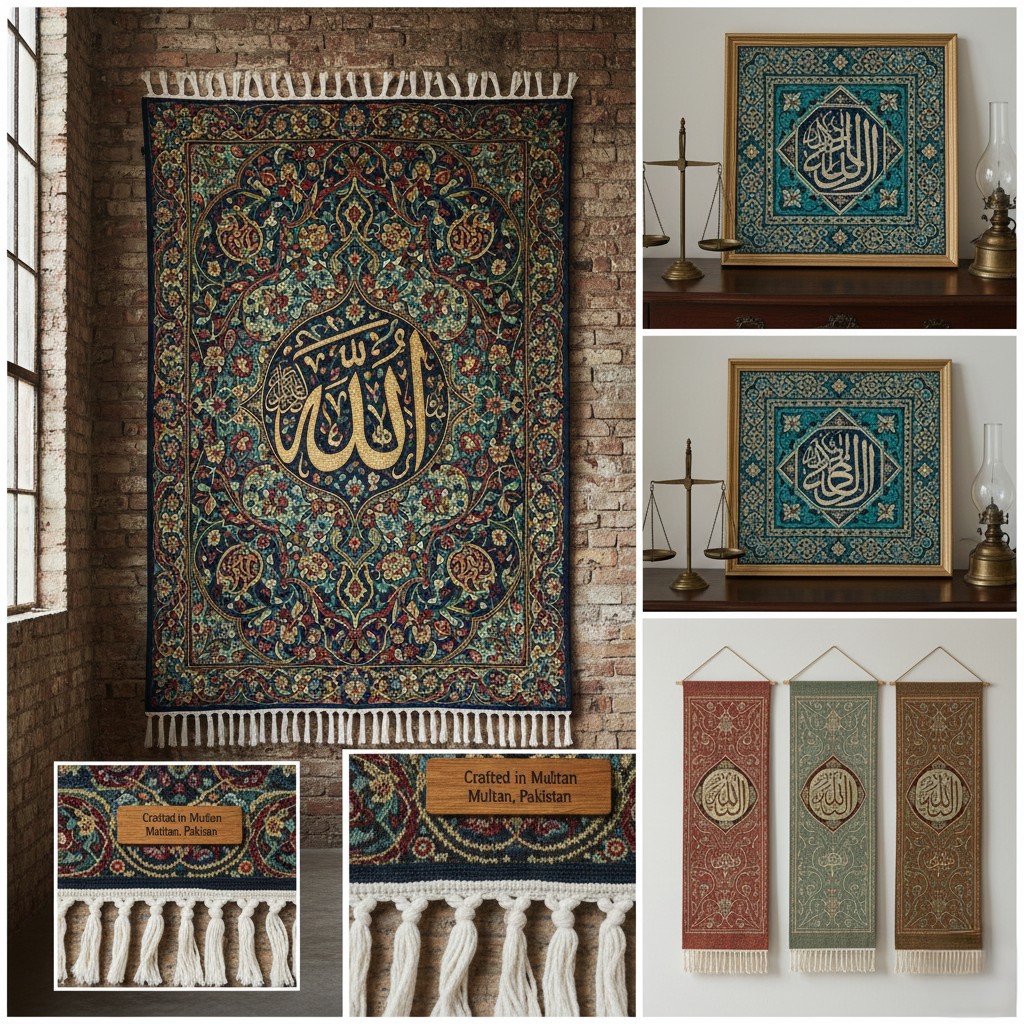
Among the most culturally significant pieces were the tapestries featuring Islamic calligraphy. These artworks held a strong sense of heritage and reverence, reflecting traditions that have influenced artistic expression across the region for centuries.
To create these woven calligraphic pieces, artisans use:
- Rich jewel-tone yarns that elevate the visual impact
- Metallic threads to highlight key strokes and accents
- Contrasting borders and motifs that frame the script
- Intricate background patterns inspired by geometric and floral designs
The woven medium enhances the calligraphy’s structure, giving each curve and flourish a sense of depth and permanence. These tapestries serve not only as decorative objects but also as expressions of cultural identity, creating a connection between sacred art forms and contemporary craftsmanship within Pakistan.
 Woven Tapestry Calligraphic ArtWoven Tapestry Calligraphic ArtWoven Tapestry Calligraphic Art
Still-Life Tapestries:
Classic Art Rendered in Thread
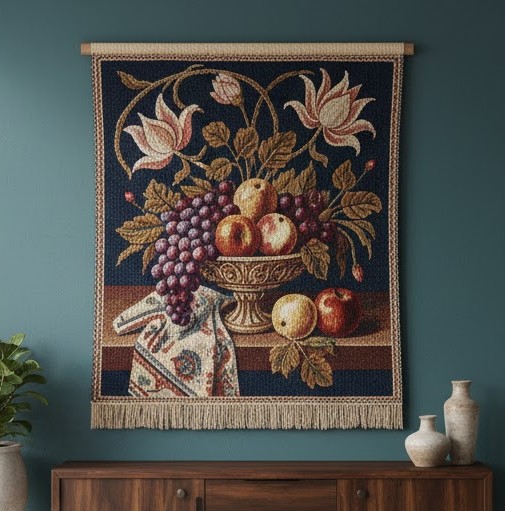
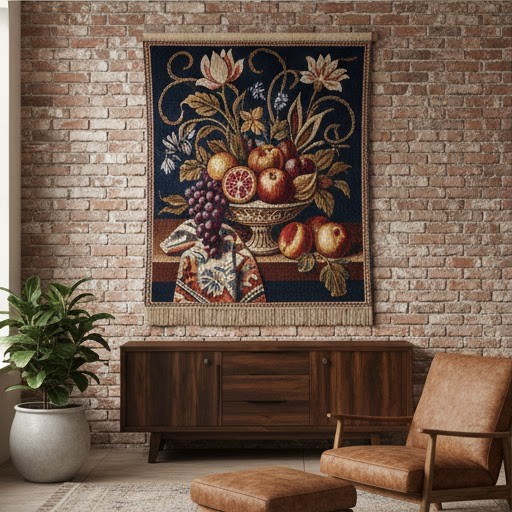
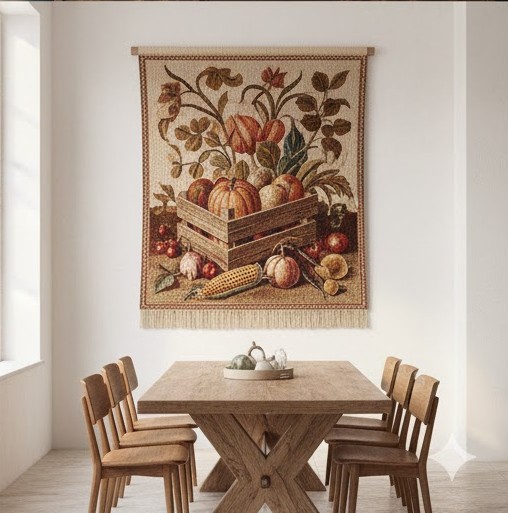
One of the first collections to capture my attention featured classic still-life scenes. The familiar image of a fruit bowl placed on a draped table - seen across centuries of fine art - took on an entirely new character when presented in woven textile form.
These pieces displayed an extraordinary commitment to detail. The artisans used:
- Layered, harmonious color palettes to create lifelike fruit textures
- Meticulous shading achieved through precise thread variation
- Soft gradients that replicated the effect of light falling across a surface
- Contrasting tones to highlight contours and bring depth to the imagery
Despite being woven, the artworks possessed a painterly feel, as though carefully brushed onto canvas. Yet the tactile nature of woven fabric added richness and presence that traditional paintings cannot replicate. These still-life tapestries embody both classical charm and contemporary craftsmanship, making them ideal statement pieces for interiors seeking warmth and sophistication.
 Woven Tapestry Art-Fruit
 Woven Tapestry Art-Fruit
 Woven Tapestry Art-Fruit
Floral Bouquet Designs with
Timeless Elegance
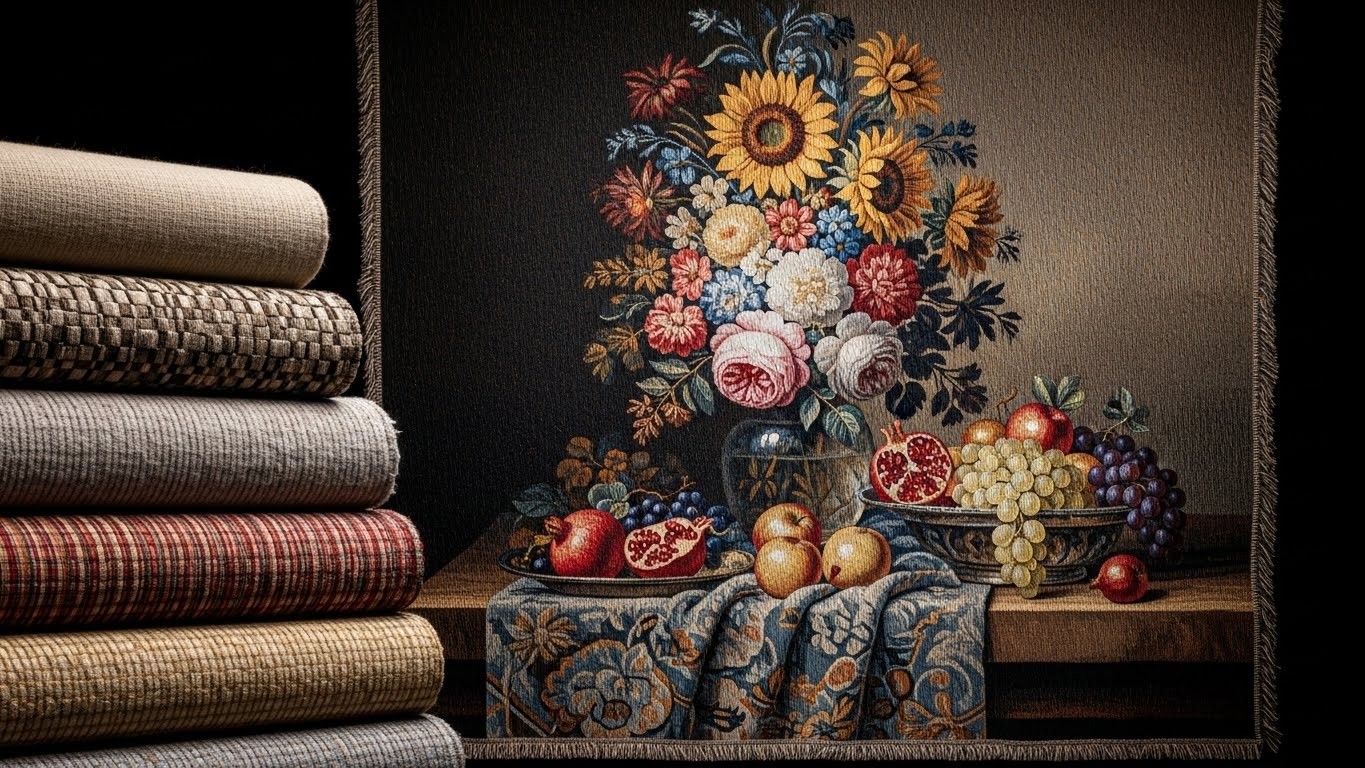
Another captivating category was the collection of floral tapestries. These works ranged from delicate rose arrangements to more vibrant and expressive mixed bouquets. Each tapestry demonstrated remarkable control over texture and tonal layering.
The artisans showcased their skill by:
- Creating subtle color transitions that add volume to petals
- Layering hues and shadows to capture botanical realism
- Balancing vibrancy and softness through thoughtful thread selection
- Composing arrangements that feel natural yet refined
The woven texture enhances these designs beautifully, offering depth and dimension that make the flowers appear almost sculptural. These floral pieces bring elegance and serenity to any space, appealing to those who appreciate decorative art that feels both timeless and handcrafted.
 Woven Tapestry Art-Floral
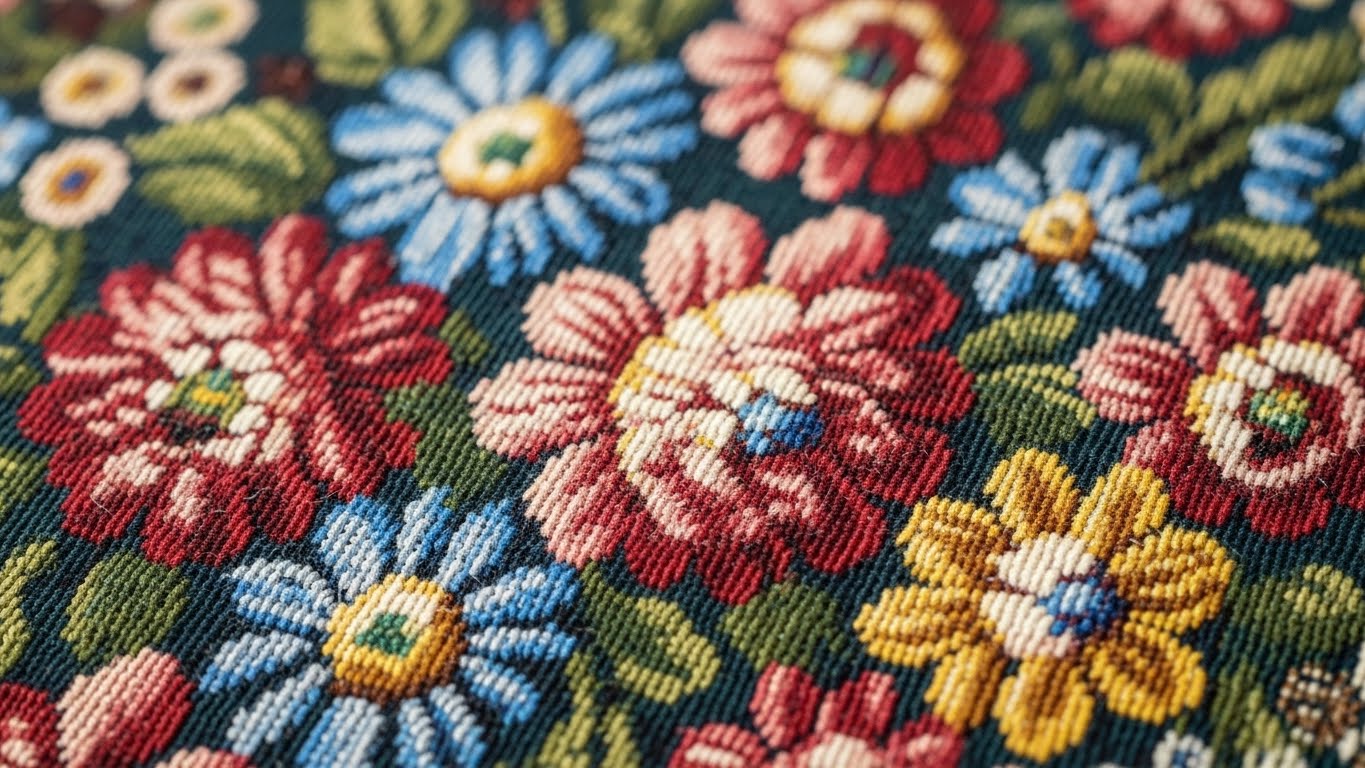 Woven Tapestry Art-Floral-close-up
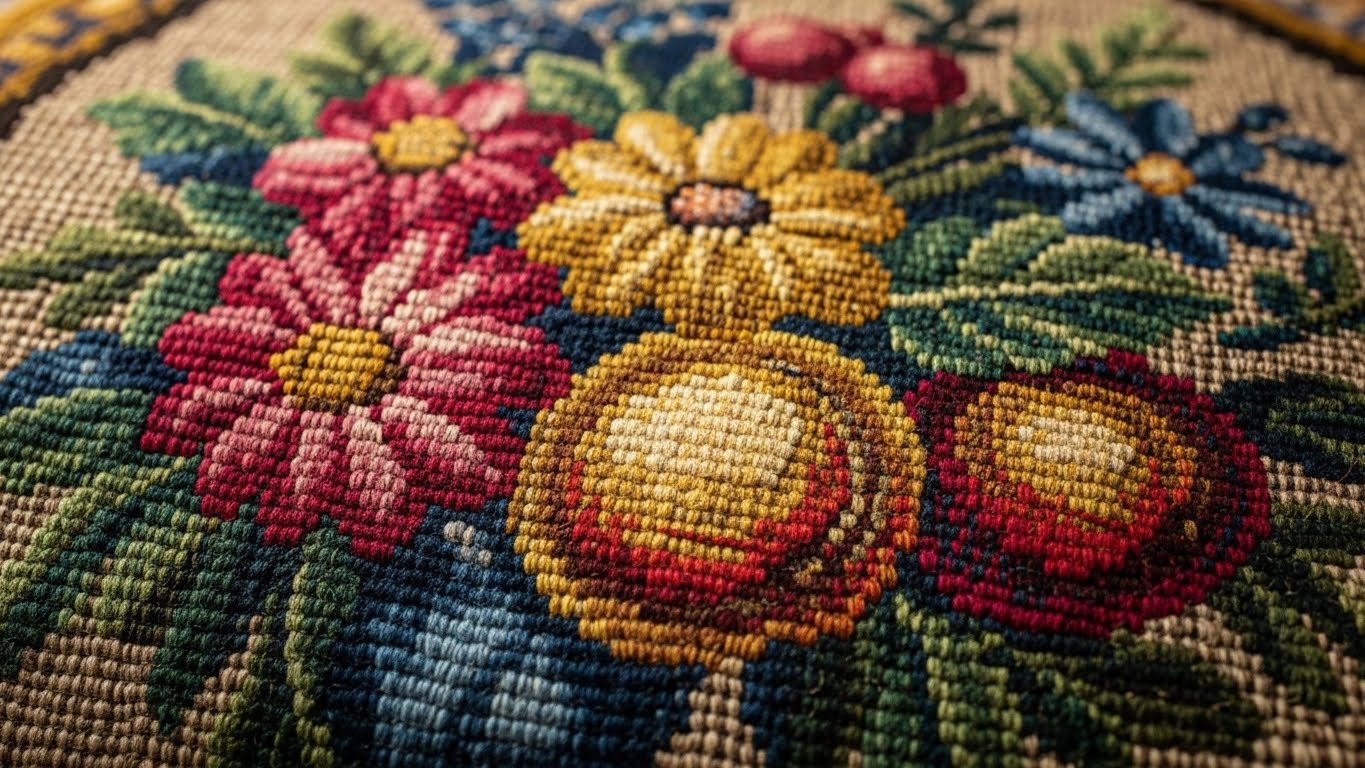 Woven Tapestry Art-Floral-close-up
What Makes These Tapestries from Pakistan Unique
Woven tapestry art from Pakistan possesses distinctive qualities shaped by skilled artisans, cultural influences, and the thoughtful integration of modern weaving technology. Several factors contribute to the uniqueness of these creations:
- Experienced artisans who merge traditional skill with technical knowledge
- High-quality materials chosen for durability, sheen, and lasting color
- Cultural richness, reflected in motifs inspired by nature, heritage, and spirituality
- Precision weaving technology capable of translating artistic concepts into detailed woven images
- A flexible production approach, allowing both commercial textiles and commissioned art pieces
This unique blend of craftsmanship and contemporary technique allows tapestry art from Pakistan to stand out in the global textile landscape, offering artworks that hold both aesthetic and cultural value.
A Living Craft Worth Celebrating
My visit to the weaving factory revealed more than a glimpse into textile production - it uncovered a living art form thriving within a modern industrial environment. The tapestries displayed on the walls were not simply decorative samples, but reflections of a craft that continues to evolve through passion, technique, and cultural expression.
Each piece - whether a still-life tableau, a floral bouquet, or a calligraphic composition - tells a story woven through countless threads. Together, they celebrate the enduring beauty of textile art and the remarkable craftsmanship found within the weaving traditions of Pakistan.
Woven tapestry art from Pakistan remains a testament to how creativity can flourish in unexpected places, and how the threads of tradition, skill, and innovation continue to intertwine to produce works of lasting beauty and meaning.
- Home
- Products and Trades
- Woven Tapestry Art

Newsletter Opt-in
Recent Articles


-
Wood with Metal Inlay Work
Aug 15, 26 03:54 AM
 Wood with metal inlay work of Pakistan shows how tables, boxes and chess boards combine function and ornament for interiors, gifting and display.
 -
Bridal Dupatta of Pakistan: Craft and Elegance
Jul 23, 26 02:59 PM
 Bridal dupatta of Pakistan reflects intricate embroidery, rich fabrics, and traditional craftsmanship in elegant wedding attire.
 -
Jamawar Fabric of Pakistan: Woven Heritage and Timeless Design
Jun 17, 26 03:15 PM
 Jamawar fabric of Pakistan is known for intricate woven paisley motifs, rich textile heritage, and timeless elegance in shawls, garments, and décor.